Tell us about the job
Takes about a minute. No obligation.
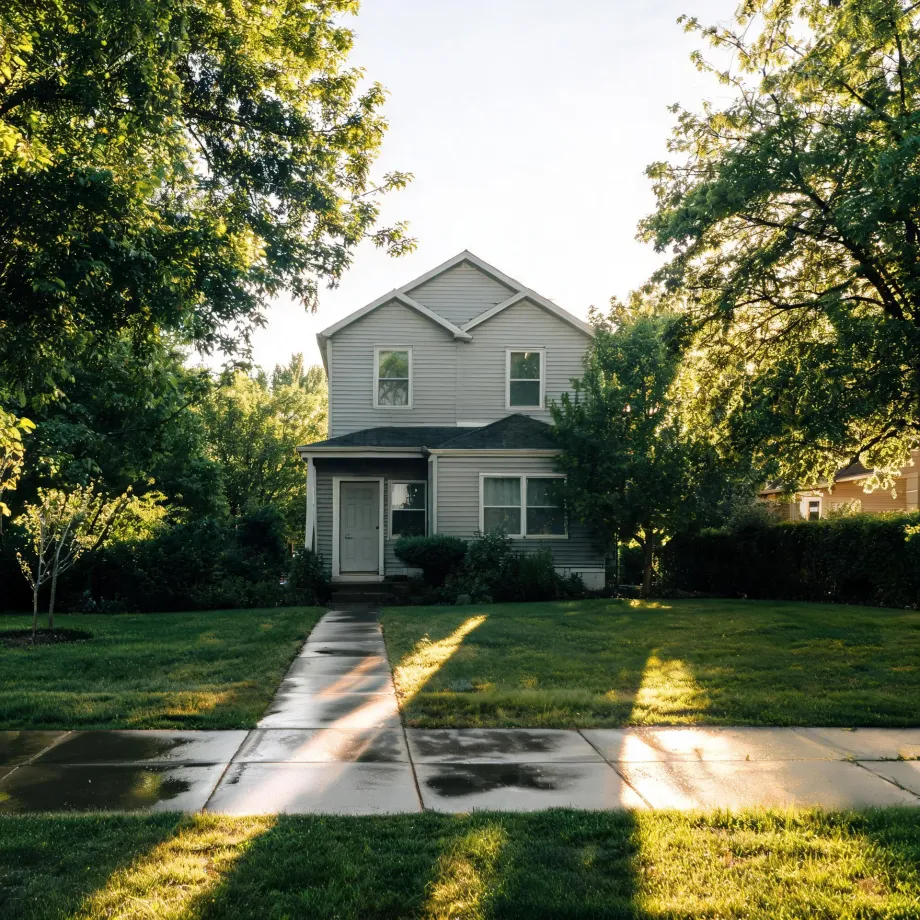
Sizing a mini-split here is not a generic calculation. Homes in Merrimack County, NH run cooling in a single month of the year, July. The compressor, the condenser fan, and the contactor each carry their full annual workload inside that single window, with no second season to spread the wear across. An undersized unit cycles harder than it should throughout July, and that stress lands on the same parts every year. A contractor has to establish the actual cooling load of the house before the equipment is chosen, because there is no mild stretch of cooling weather to compensate for a shortfall in the specification.
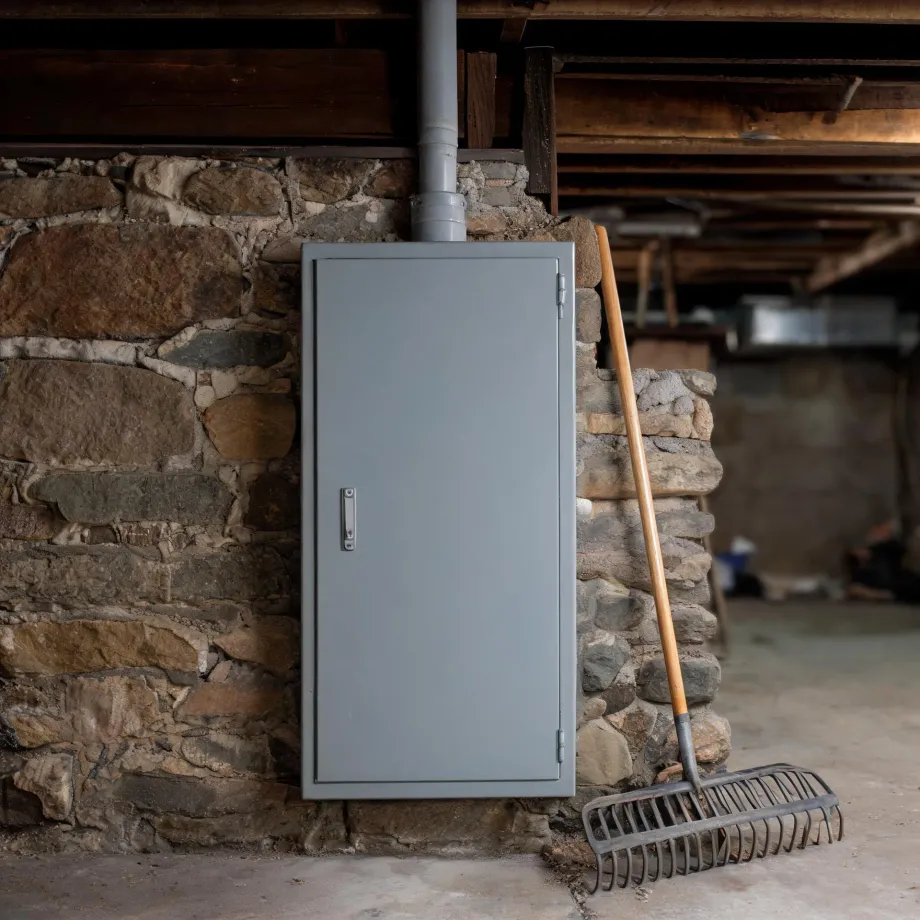
Electrical panels in much of this county's housing were sized for loads that existed before modern mini-split systems were designed. Half the homes in Merrimack County, New Hampshire were built in 1977 or earlier (2020-2024 ACS 5-year). A contractor installing a mini-split today has to open the panel box and determine whether the existing service handles the draw before the rest of the quote means anything. If it does not, a service upgrade comes first, and that changes both the scope and the schedule of the job.
The Mini-split Parts That Come With an HVAC Installation
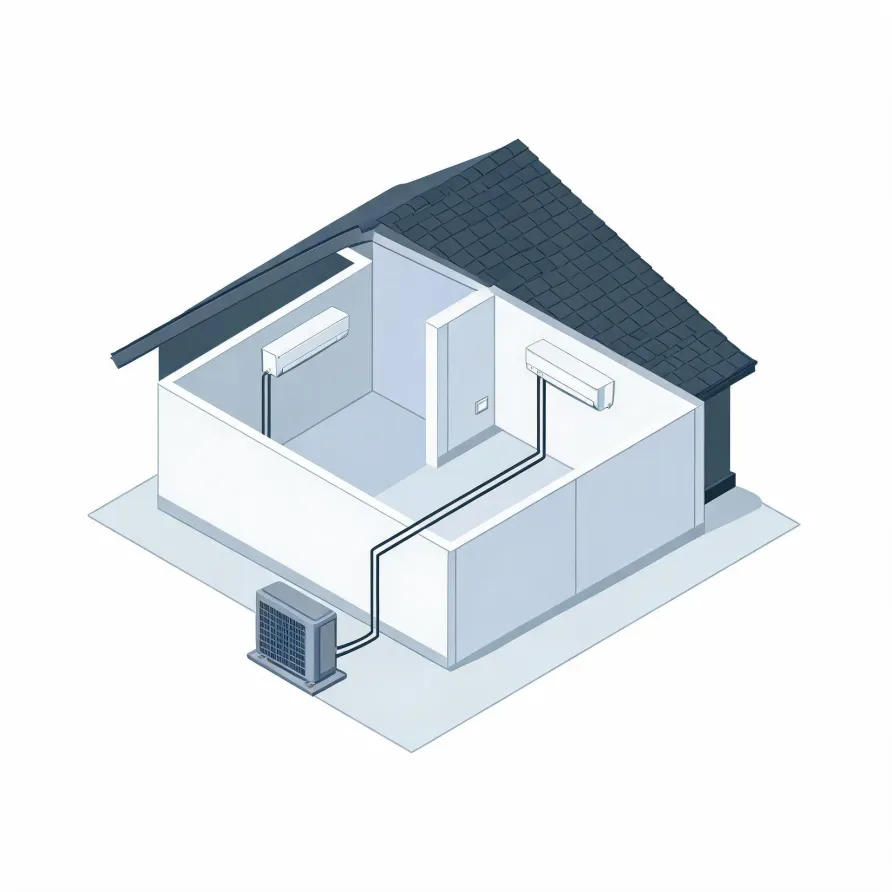
The indoor air handler is the piece a homeowner sees every day. It mounts high on an interior wall and delivers conditioned air directly into the room. Outside, the condenser unit sits on a pad or bracket against the exterior wall and houses the compressor and coil that do the heavy lifting.
A refrigerant line set runs through a small hole in the wall, connecting the two units and carrying the refrigerant between them. A condensate drain line exits the indoor unit and routes moisture out of the house, and a dedicated electrical line runs from the panel to the outdoor unit to power the whole system.
The drawing beside this text shows how those pieces relate in a typical installation, and a licensed contractor determines exactly how that layout applies to your home.
Find a contractor in Merrimack CountyMerrimack County, by the numbers
138 severe weather events were recorded in Merrimack County, New Hampshire between 2015 and 2024.
NOAA National Centers for Environmental Information, Storm Events Database, bulk CSV export, events 2015-01-01 through 2024-12-31.Half the homes in Merrimack County, New Hampshire were built in 1977 or earlier (2020-2024 ACS 5-year).
U.S. Census Bureau, 2020-2024 American Community Survey 5-Year EstimatesMerrimack County, New Hampshire holds 66,497 housing units (2020-2024 ACS 5-year).
U.S. Census Bureau, 2020-2024 American Community Survey 5-Year EstimatesOwners occupy 73.5% of the occupied homes in Merrimack County, New Hampshire (2020-2024 ACS 5-year).
U.S. Census Bureau, 2020-2024 American Community Survey 5-Year EstimatesInstallation Rules & Code for Mini-Splits in Merrimack County, New Hampshire2 sourced rules and standards
Licensing and Legal Requirements in Merrimack County, New Hampshire
New Hampshire's mechanical licensing board issues nine credentials — hearth system, four fuel gas endorsements, domestic appliance technician, and master, journeyman and apprentice plumber — and a licensee may not work outside the specialty their licence names. None of the nine is an HVAC licence.
New Hampshire does not license HVAC as a trade, and says so where it matters: the plumbing licence expressly does not reach a person installing heating, cooling, air conditioning or domestic water heating systems, whether solar, oil, gas or electric. The gas piping on a gas-fired system is a separate matter and needs a fuel gas fitter licence.
Severe Weather Events in Merrimack County
New Hampshire winters and summers put real stress on heating and cooling equipment, and Merrimack County gets its share of weather that pushes systems hard. What a mini-split handles here is a local question, shaped by local conditions.
138 severe weather events, 2015–2024. Source: NOAA National Centers for Environmental Information, Storm Events Database.