Tell us about the job
Takes about a minute. No obligation.
Size a mini-split for a warm afternoon in June and it will be wrong every day July arrives. Homes in Hillsborough County, NH run cooling in a single month of the year, July. The compressor starts and stops through that month's heat, and every start cycle stresses the refrigerant circuit more than steady running does. A contractor quoting an install here works out the peak load for July specifically, because the unit will not get another chance to prove itself until the following year. An undersized system runs without relief and an oversized one short-cycles, and both failures trace back to a load calculation that did not account for what this county's cooling window actually asks of the equipment.
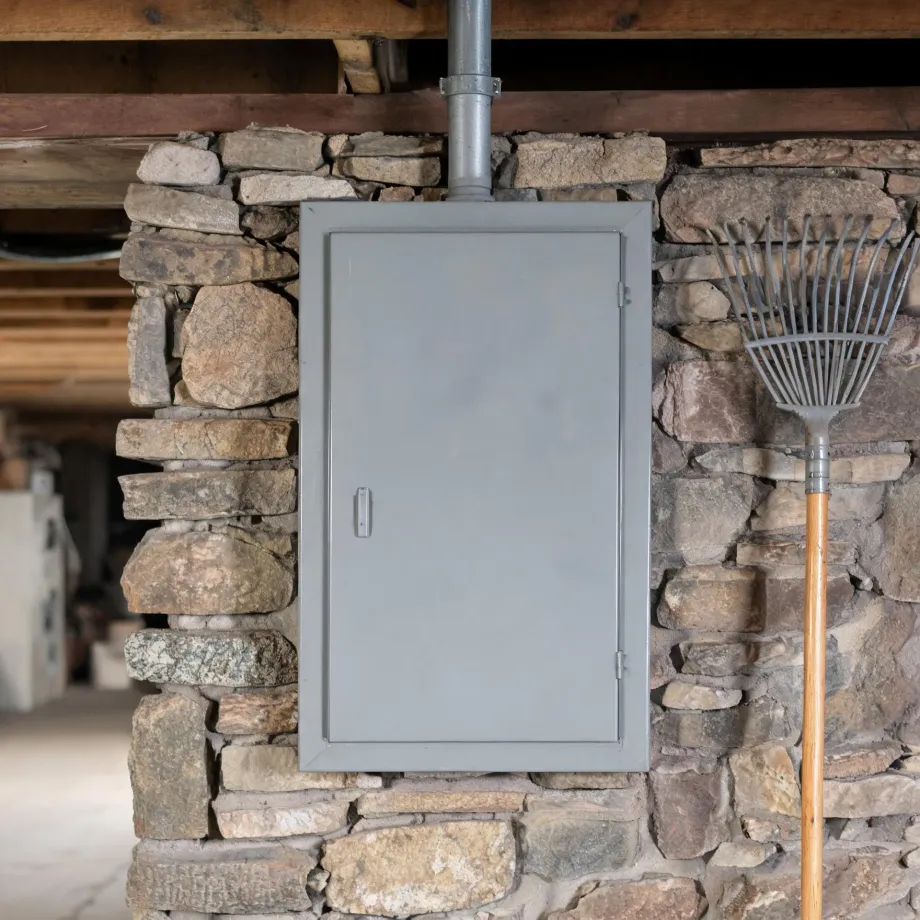
Older electrical panels are where mini-split installations in Hillsborough County run into real friction. Half the homes in Hillsborough County, New Hampshire were built in 1978 or earlier (2020-2024 ACS 5-year). A house built for the loads of that era carries a service panel sized to match them, and a mini-split draws differently than what that panel was designed around. A contractor scoping the job will open the panel box early, because what they find there determines whether the electrical work is a line item or the whole project.
The Parts of a Mini-Split System and What Gets Installed
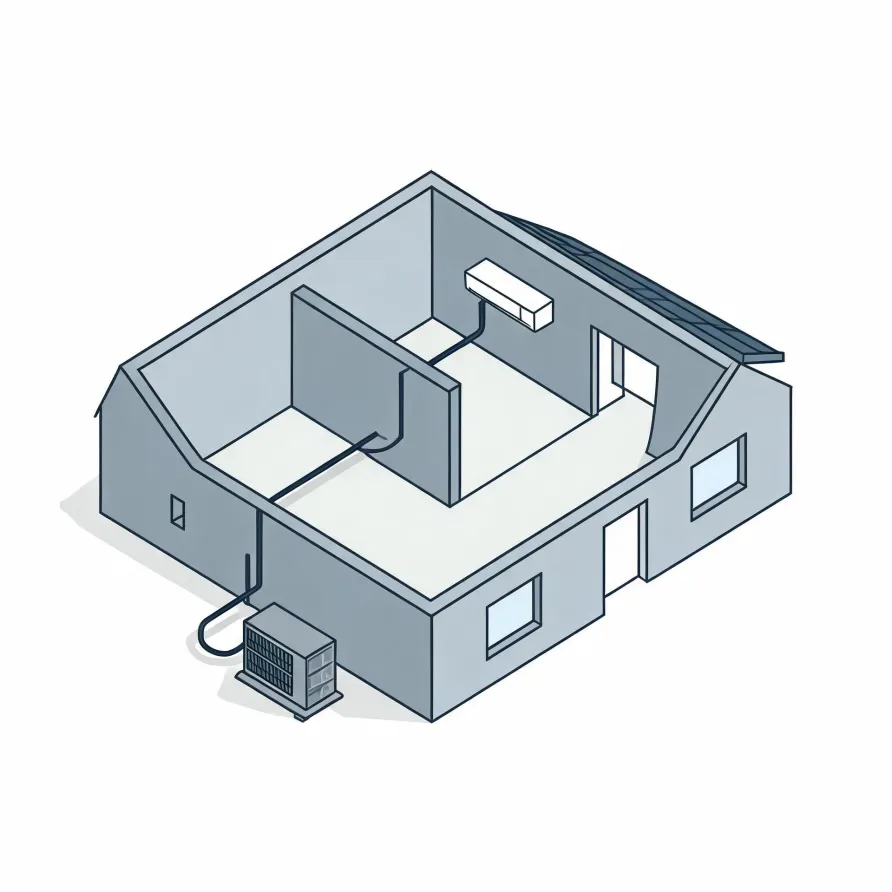
The indoor air handler mounts high on an interior wall in the room being conditioned, and it is the piece a homeowner sees every day. The outdoor compressor unit sits on a pad or bracket outside the house and does the mechanical work of the system. These two units are the core of what a contractor installs.
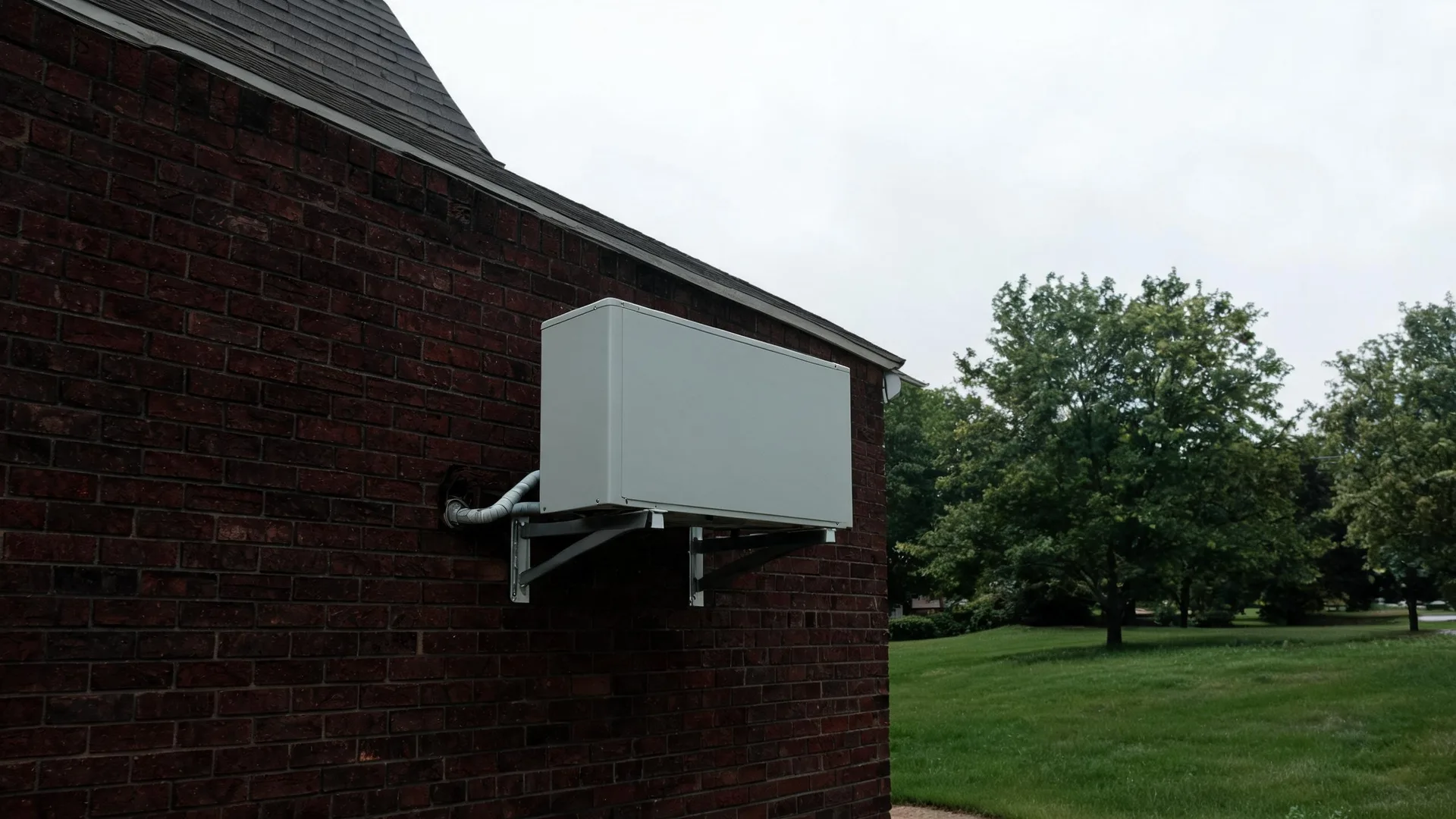
A refrigerant line set runs through a small hole in the wall to connect the indoor and outdoor units, and a condensate drain line carries moisture away from the air handler to the outside. A disconnect box goes on the exterior wall near the compressor, giving the system a dedicated shutoff point close to the equipment.
The drawing beside this text shows the general layout of a mini-split system, and a licensed contractor determines exactly how each piece is placed in your home.
Find a contractor in Hillsborough CountyHillsborough County by the numbers
251 severe weather events were recorded in Hillsborough County, New Hampshire between 2015 and 2024.
NOAA National Centers for Environmental Information, Storm Events Database, bulk CSV export, events 2015-01-01 through 2024-12-31.Half the homes in Hillsborough County, New Hampshire were built in 1978 or earlier (2020-2024 ACS 5-year).
U.S. Census Bureau, 2020-2024 American Community Survey 5-Year EstimatesHillsborough County, New Hampshire holds 177,734 housing units (2020-2024 ACS 5-year).
U.S. Census Bureau, 2020-2024 American Community Survey 5-Year EstimatesOwners occupy 67.4% of the occupied homes in Hillsborough County, New Hampshire (2020-2024 ACS 5-year).
U.S. Census Bureau, 2020-2024 American Community Survey 5-Year EstimatesInstallation Rules & Code for Mini-Split Work in Hillsborough County, New Hampshire2 sourced rules and standards
Licensing and Legal Requirements in Hillsborough County, New Hampshire
New Hampshire's mechanical licensing board issues nine credentials — hearth system, four fuel gas endorsements, domestic appliance technician, and master, journeyman and apprentice plumber — and a licensee may not work outside the specialty their licence names. None of the nine is an HVAC licence.
New Hampshire does not license HVAC as a trade, and says so where it matters: the plumbing licence expressly does not reach a person installing heating, cooling, air conditioning or domestic water heating systems, whether solar, oil, gas or electric. The gas piping on a gas-fired system is a separate matter and needs a fuel gas fitter licence.
Severe Weather Events in Hillsborough County
Weather in Hillsborough County puts real demands on heating and cooling equipment. How hard a system has to work, and how long it holds up, is shaped by what the local climate throws at it year after year.
251 severe weather events, 2015–2024. Source: NOAA National Centers for Environmental Information, Storm Events Database.