Tell us about the job
Takes about a minute. No obligation.
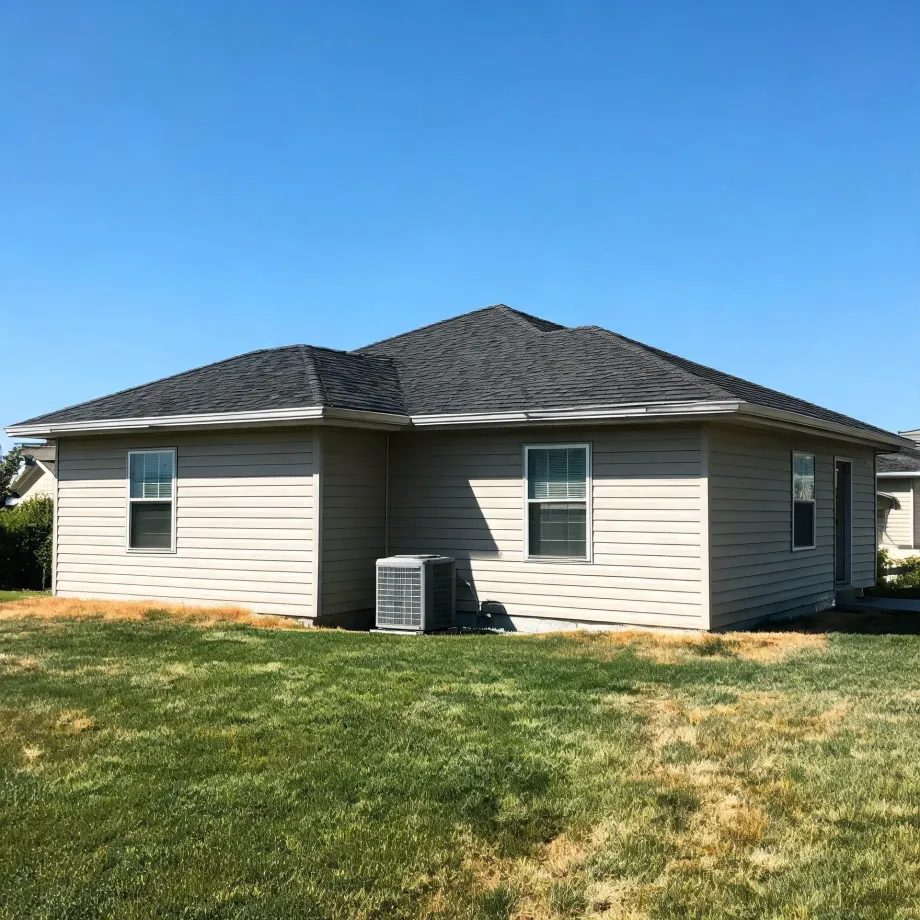
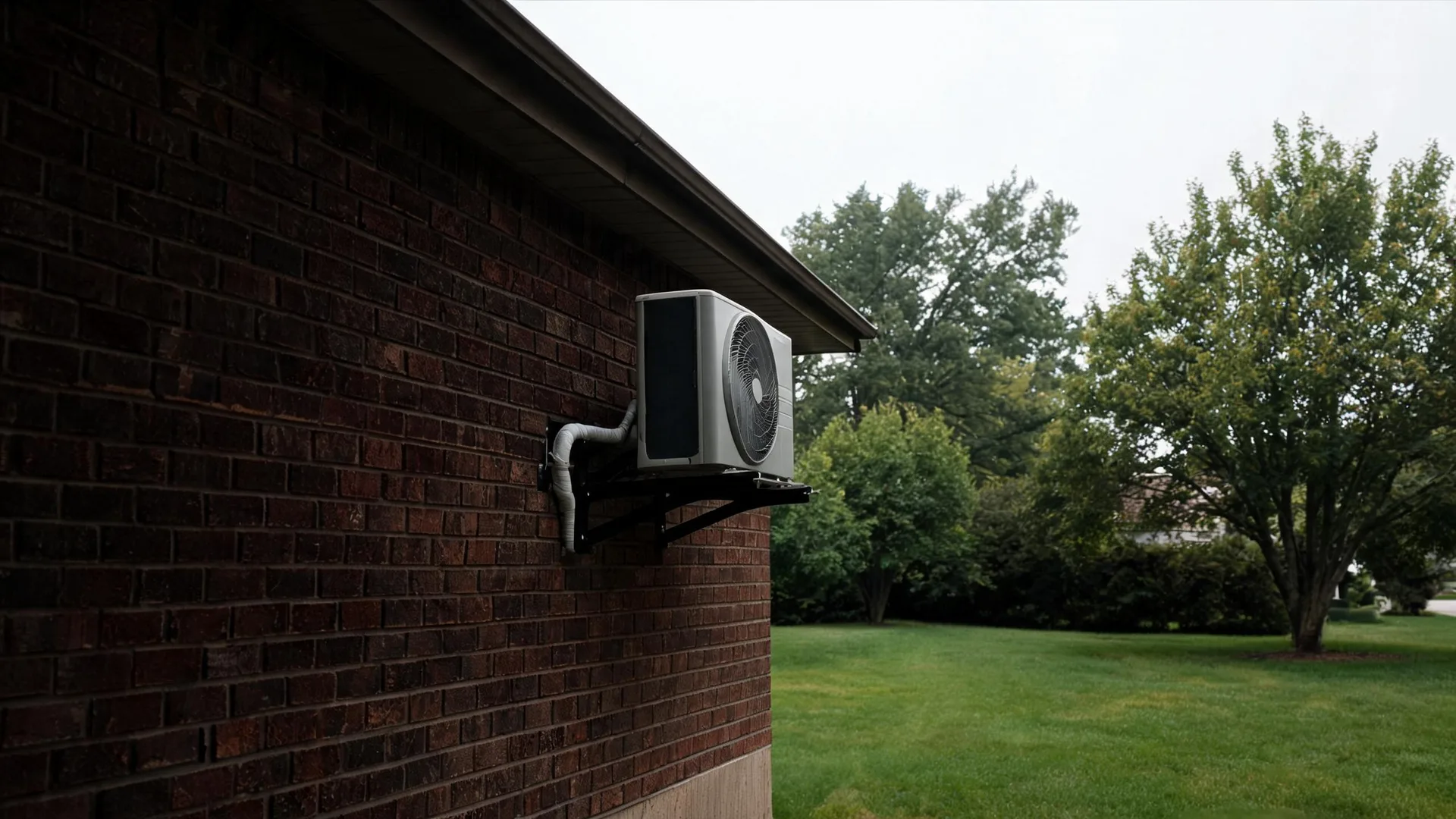
For a mini-split installation in Carroll County, the contractor's first question is how cold it gets, not how hot. Homes in Carroll County, NH have essentially no cooling season — no month of the year is warm enough to call for it. That means the compressor and heat exchanger carry a heating load through the cold months, and the cooling side sits largely unused. A contractor sizing a system here sets capacity against winter temperatures, calculates where the unit's output starts to fall short, and prices backup heat accordingly. Commissioning for a system like this is a heating job.
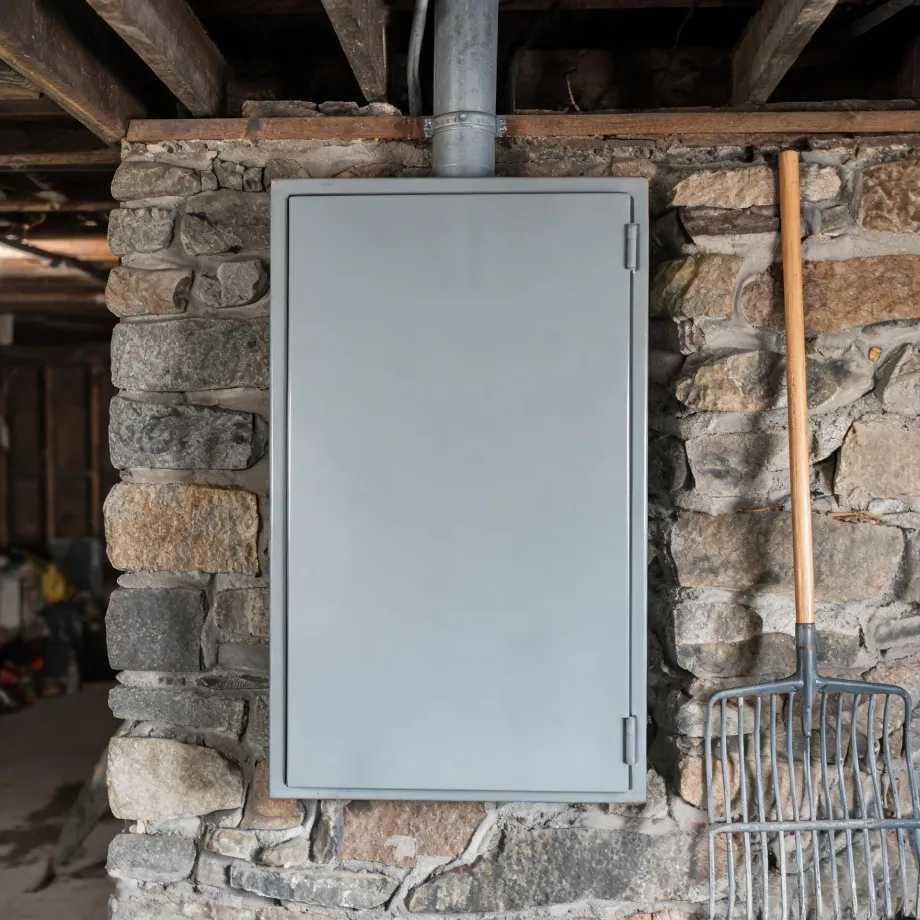
Electrical service panels in this part of New Hampshire were built to handle what the house needed at the time it was built, and mini-split systems draw more than most of that stock was wired to carry. Half the homes in Carroll County, New Hampshire were built in 1982 or earlier (2020-2024 ACS 5-year). A contractor quoting a mini-split job here starts at the panel, not the wall where the head unit goes, because the circuit capacity decides whether the installation is straightforward or whether it requires an upgrade first. The ductwork question does not apply, but the electrical one does, and it has a concrete answer once someone opens the box.
The Parts of a Mini-split System and What Gets Installed
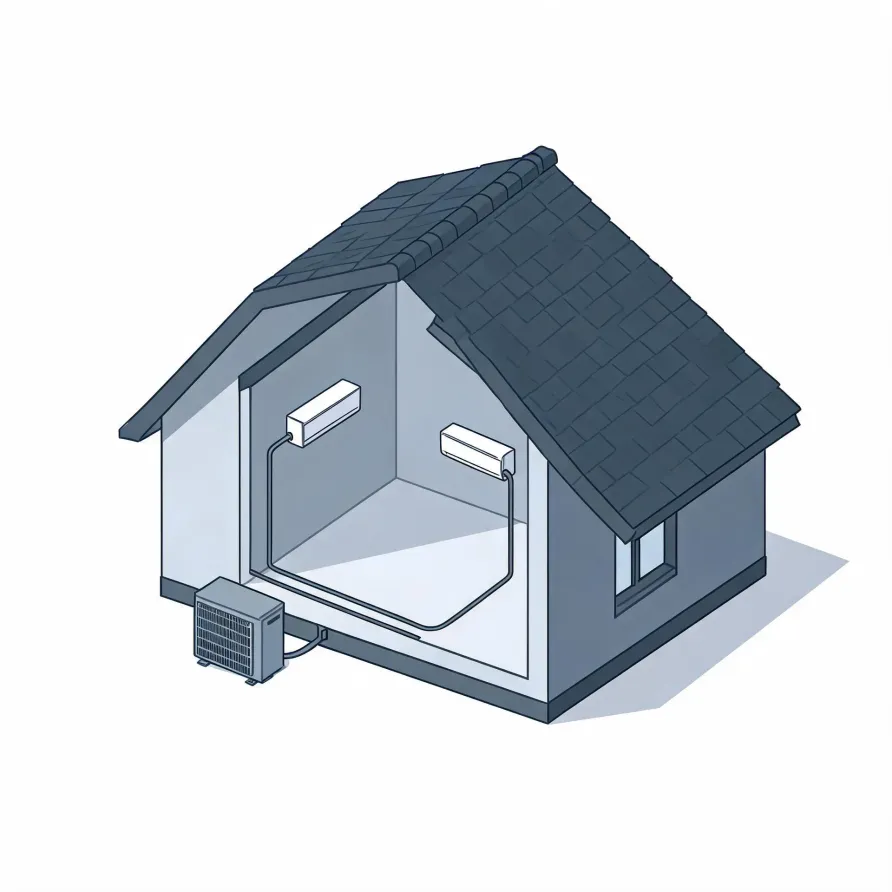
The indoor air handler mounts high on a wall inside the room being conditioned, where it draws in room air and delivers conditioned air back out. The outdoor unit sits on the ground or a bracket outside the house and holds the compressor and condenser coil. These two units are the core of what a contractor places and secures during an installation.
A refrigerant line set runs through a small hole in the wall to connect the indoor and outdoor units, carrying refrigerant between them. A condensate drain line routes moisture from the indoor unit to the outside. A dedicated electrical circuit feeds the outdoor unit, and a control wire runs alongside the line set to carry signals between the two units.
The drawing alongside this text shows a typical layout, and a licensed contractor determines exactly how each piece is positioned and routed in your home.
Find a contractor in Carroll CountyCarroll County by the numbers
214 severe weather events were recorded in Carroll County, New Hampshire between 2015 and 2024.
NOAA National Centers for Environmental Information, Storm Events Database, bulk CSV export, events 2015-01-01 through 2024-12-31.Half the homes in Carroll County, New Hampshire were built in 1982 or earlier (2020-2024 ACS 5-year).
U.S. Census Bureau, 2020-2024 American Community Survey 5-Year EstimatesCarroll County, New Hampshire holds 40,421 housing units (2020-2024 ACS 5-year).
U.S. Census Bureau, 2020-2024 American Community Survey 5-Year EstimatesOwners occupy 83.4% of the occupied homes in Carroll County, New Hampshire (2020-2024 ACS 5-year).
U.S. Census Bureau, 2020-2024 American Community Survey 5-Year EstimatesCodes & Standards for Mini-Split Work in Carroll County, New Hampshire2 sourced rules and standards
Licensing and Legal Requirements in Carroll County, New Hampshire
New Hampshire's mechanical licensing board issues nine credentials — hearth system, four fuel gas endorsements, domestic appliance technician, and master, journeyman and apprentice plumber — and a licensee may not work outside the specialty their licence names. None of the nine is an HVAC licence.
New Hampshire does not license HVAC as a trade, and says so where it matters: the plumbing licence expressly does not reach a person installing heating, cooling, air conditioning or domestic water heating systems, whether solar, oil, gas or electric. The gas piping on a gas-fired system is a separate matter and needs a fuel gas fitter licence.
Severe Weather Events in Carroll County
Carroll County's climate puts real demands on heating and cooling equipment, and those demands vary with what the weather actually does here. A mini-split sized and installed for local conditions handles that workload differently than one spec'd for somewhere else.
214 severe weather events, 2015–2024. Source: NOAA National Centers for Environmental Information, Storm Events Database.