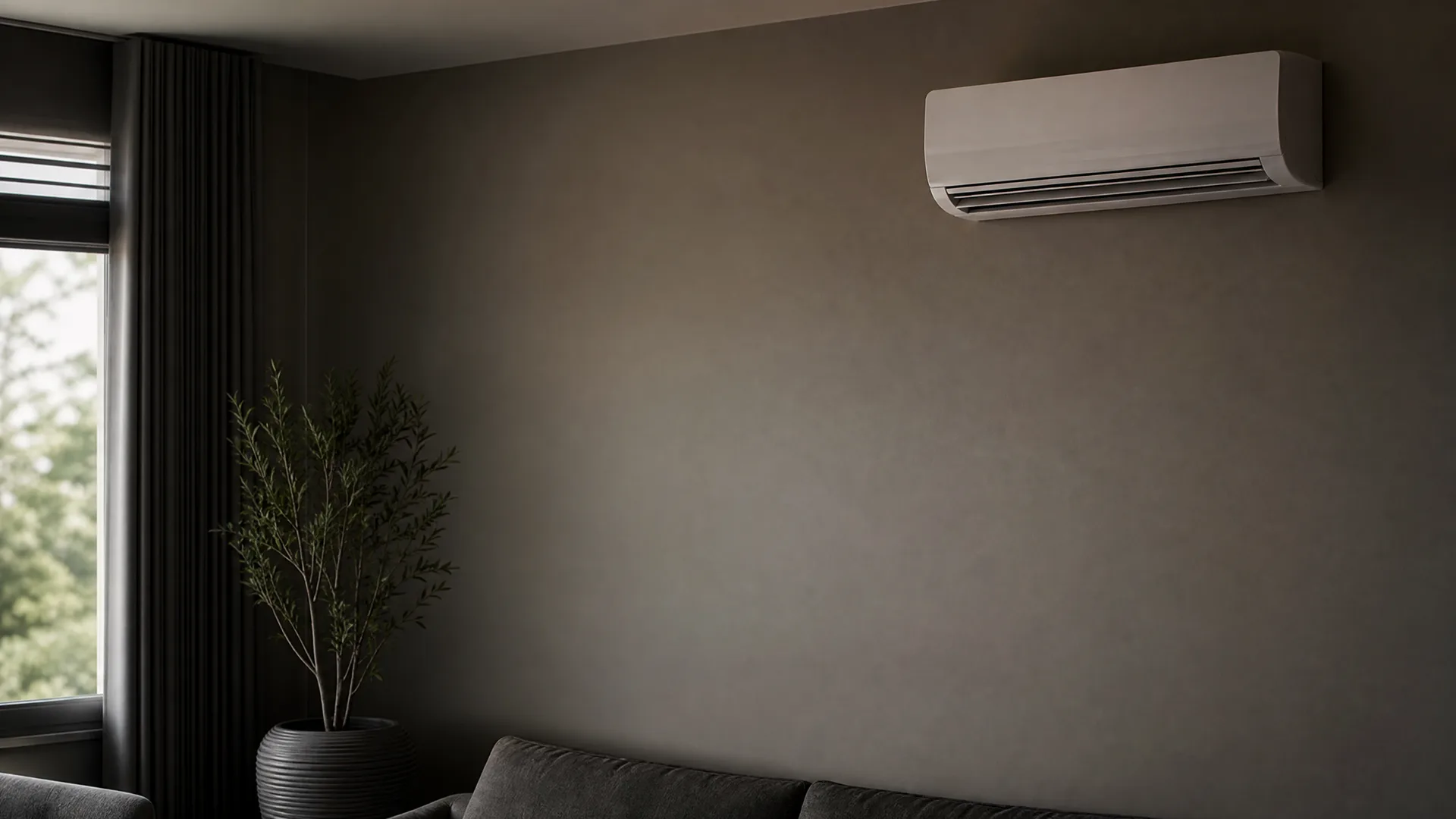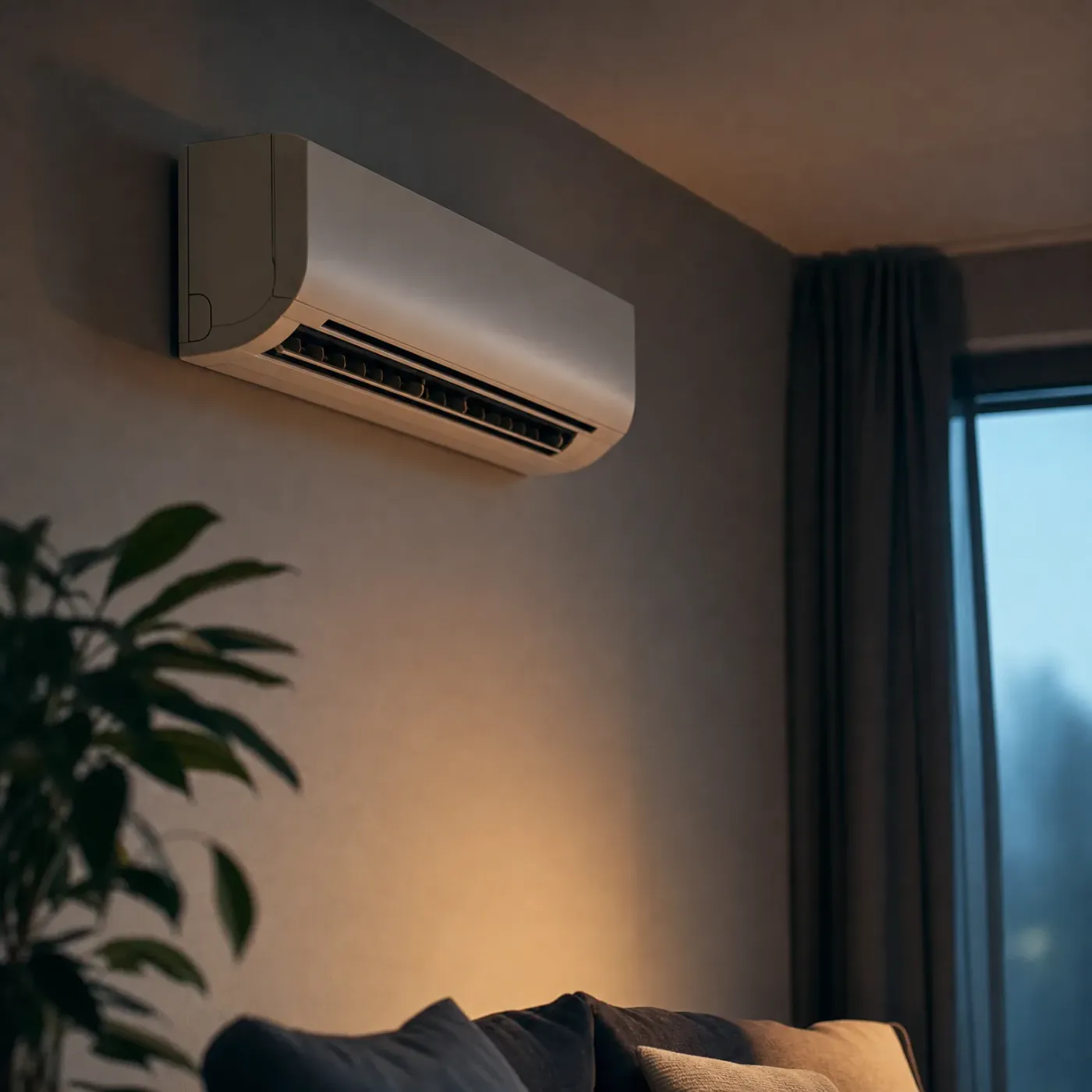




A white wall-mounted mini-split indoor unit near the ceiling of a dimly lit room, with a curtained window at right, a leafy potted plant at lower left, and a cushioned sofa at the bottom.

Skip the calls to every shop

Why your mini split smells when heating in New Hampshire

A mini split throwing off a bad smell when the heat kicks on usually means something specific, mold in the coil, dust burning off, or a drain line gone sour. This page gets into what causes each. Skip the search for a local contractor and the back and forth explaining the smell twice. One call connects you to someone who works on these systems all winter and can tell you what it is before they even get there.

Start one form

A musty or sour smell from your mini split when it switches to heat usually means moisture built up in the indoor unit while it sat idle or ran cooling earlier. New Hampshire summers are warm but not heavy with humidity the way they are further south, but the unit still pulls some moisture out of the air, and that moisture settles on the coil and in the drain pan. When the system switches over to heat, warm air passes over a coil that's been sitting damp, and whatever grew there, usually mold or mildew, gets pushed into the room with the air. A burning or dusty smell is different. That's often just dust on the coil or heating element burning off after the unit sat unused, and it should fade after it runs a while. If the smell keeps up past the first few minutes, or it smells sour rather than dusty, something in the unit needs a look before it gets worse.

A gray-haired man in a dark long-sleeve shirt sits on a gray sofa in a living room, looking toward a sunlit window with sheer curtains.
A gray-haired man in a dark green sweatshirt sits on a sofa in a living room, looking toward a bright window, with a houseplant, lamp, fireplace and framed art behind him.
A gray-haired bearded man in a dark green collared sweater sits on a sofa in a living room with a window, houseplant, floor lamp and bookshelves, looking off to the side.
A gray-haired man in a dark green sweater sits on a sofa in a sunlit living room, looking off to the side, with a framed landscape painting, dining table and shelving behind him.

The smell that burns off fast

A sharp, dusty smell in the first few minutes of heat is usually just dust that settled on the heat exchanger element while the unit sat idle. Mini splits heat with a small electric element or by reversing the refrigerant cycle, and either way that surface sits unused most of the summer. Once it warms up, whatever collected on it burns off. If the smell fades within ten or fifteen minutes and doesn't come back, that's what happened. If it lingers every time the unit runs, something else is going on.


The smell that doesn't go away

Mold inside the indoor unit doesn't burn off, it gets stronger when the blower pushes warm air across it. It grows on the coil fins or in the drain pan, places that stay damp long after cooling season ends. A mini split's drain line can also hold standing water that turns sour over months of sitting, and that smell will travel up through the unit whenever air moves through it. Either problem needs the coil or the line actually cleaned, not just time, and it won't clear on its own.

A wall-mounted mini-split air conditioner indoor unit with a dusty beige casing and dark louvered vent, installed near the ceiling on a plain beige wall.
Before you get your mini split repair
A white wall-mounted mini-split indoor unit installed high on a gray interior wall, with a sofa, dark table and window visible in an adjoining room to the right.
After you get your mini split repair

A mini split doesn't have two separate systems for heat and cooling. It has one coil, and heating just means running the refrigerant backward so that coil gives off heat instead of pulling it in. All summer, that same coil was pulling moisture out of your living room air. Most of that water drips into a pan and runs out through a condensate line. If the line has a partial clog, or the pan hasn't drained all the way, that water stays put. It sits against the coil and the surrounding plastic, and nothing about switching the unit to heat mode dries it out right away. Warmth just makes it worse, since mold doesn't need the fan running to grow, only the damp and the heat that's already sitting there. On top of that, the blower wheel has had all summer to collect a layer of dust. The first time warm air moves through it, some of that dust gets thrown into the room with it. None of this shows up while the unit sits idle. It only shows up once heat starts moving.

How the smell actually gets there

  • A mini split heats by reversing the flow of refrigerant so the indoor coil runs hot instead of cold.
  • That same indoor coil is what pulls moisture out of the air every time the unit runs cooling.
  • Water that collects on the coil drains out through a condensate line that slopes to the outside or a drain pan.
  • If that line is partly blocked, water sits in the pan and the coil stays damp between cooling and heating.
  • A blower wheel caked with dust will shed some of it into the airstream the moment warm air starts moving.
  • Mold growing inside the unit doesn't need the system running to produce a smell, only warmth and moisture already there.
A middle-aged woman with shoulder-length dark hair, wearing a gray cardigan over a cream top, sits in an upholstered armchair and looks toward a sunlit window, with a shelf holding framed pictures and a plant behind her.
A woman and a child wrapped together in a knitted gray blanket on a couch, with the child's head resting on her shoulder and a lit table lamp and houseplant in the background.
A white wall-mounted mini-split air conditioner on a light gray wall above a gray sofa with cushions, with a framed abstract artwork at right, a wooden door and potted plant at left.

Skip calling around

Only one pro gets your request, so you hear from one company.

Describe what your mini split is doing once, in one form.

Skip calling around

Sending the form costs nothing.

A white wall-mounted mini-split air conditioner unit high on a light gray interior wall, with a beige curtain and window at the left and wood-look flooring below.
A mini split that's clean inside blows heat with no odor, just warm air moving across a coil that's dry and clear.
A dusty white wall-mounted mini-split air conditioner indoor unit with open louvers, installed near the ceiling on a plain light-colored wall.
Dust and grime caked on the vents like this usually means the smell comes back every time the unit kicks on.
  1. Cooling runs first and leaves the indoor coil wet.

  2. Moisture sits in the coil and drain pan when it's idle.

  3. Dust and mold spores settle on the damp coil surface.

  4. The reversing valve switches refrigerant flow for heat mode.

Can I just run the fan to dry it out myself before heat season?

Can I just run the fan to dry it out myself before heat season?

Fan-only mode helps some, but it won't reach a dirty coil or a clogged drain line

Running the fan without cooling or heat will move air across the coil and can dry off surface moisture, so it's worth doing for an hour or two before you switch over for the season. But fan mode doesn't clean anything. If mold has already taken hold on the coil, or dust has built up on the fins, blowing air across it just spreads the smell through the house faster. A clogged condensate drain won't clear itself either, and standing water in the pan will keep feeding the smell no matter how long the fan runs. If the odor is still there after a day of fan-only use, that points to buildup a contractor needs to clean out by hand.

Two-story house with beige horizontal siding, gray shingled gable roofs and a covered front entry, with an outdoor air conditioning unit beside it and a partly dry grass lawn in front under a clear blue sky.

New Hampshire summers run mild. Weather service data puts the average summer dew point here at 59°F, which counts as comfortable almost anywhere. That matters for your mini split because the indoor coil only pulls a moderate amount of moisture out of the air on cooling days, not a heavy load like you'd get further south. But moderate isn't none. Over June, July and August that moisture still collects on the coil and in the drain pan, and if the unit sits idle between cooling cycles, it sits there long enough for mold to take hold. That's what you're smelling when the heat kicks on and the air coming out turns musty.

NASA POWER T2MDEW county cells weighted by homes

What are you noticing when the heat kicks on

You probably catch it in the first minute or two, right when the unit switches over to heat. Maybe it's a musty smell, like a damp basement, that fades after the room warms up. Maybe it's sharper, more like something burning dust. Some homeowners notice the smell is worse first thing in the morning or after the unit has sat off for a day. You might also see a faint haze near the vents when it first kicks on, or notice the smell seems to follow you into whatever room that indoor head serves. None of this means the unit is broken. But a smell that keeps coming back every heating cycle usually means mold or standing water somewhere inside, and left alone, that keeps circulating into the air you're breathing all winter.

A dim room with a wall-mounted mini-split air conditioner above a vertical water stain running down the wall to a towel on the floor, with a desk, chair, lamp and potted plant beside a window.

It's late afternoon in August, and you're at the desk in your home office, the mini split on the wall above you clicking over to heat because the sun's gone off the windows and the room's cooled down fast. You catch the smell first, sour, almost like a wet basement. Then you see it: a streak running down the wall under the indoor unit, dark against the paint, water beading at the bottom edge of the case. You grab a towel off the hall closet shelf and press it against the baseboard before it reaches the outlet behind your desk. The unit keeps running, warm air still pushing out, like nothing's wrong with it.

Power costs 24.53 cents per kilowatt-hour statewide

At 24.53 cents per kilowatt-hour, you already notice what your mini split costs to run. Letting a dirty coil or clogged drain cause that smell means running the unit longer, or louder, to push heat through buildup that blocks airflow, and that shows up on the bill a month later.

EIA-861 2025 statewide residential average

A closed dark laptop and a ceramic mug of coffee on a wooden dining table, with wooden chairs, a dark kitchen cabinet with cutting boards and a potted plant, and a leafy plant by a window in the background.

A smell when the heat kicks on has a cause you can find

A musty or sour smell from your mini split in heat mode comes from moisture, dust, or mold sitting on the indoor coil or in the drain line. Which one it is decides whether a cleaning clears it or the drain and coil need real work. Either way, a tech who works on these units through a New Hampshire winter has seen it before and knows where to look first.

Finding that person is usually the slow part. You search, you call a few places, you explain the smell and the unit and the model number again on each call, then you sit with quotes that are hard to compare because nobody looked at the same thing. Requesting through this page sends your situation to one licensed New Hampshire contractor who works on mini splits all year, not a handful of companies all calling you back at once. You explain it once, to the person who's actually going to open the unit.

A wooden table holding a stone vase with a bare branch, two stacked books and a small dark bowl, beside a window with green foliage outside and a sofa in the dim background.
A white wall-mounted mini-split air conditioner high on a dim gray interior wall, with a potted thin-leaved plant, dark curtains and a window at left and a dark sofa at bottom.

Describe it once

Your request stays with one local pro.

Step 1 of 3: Equipment