A white wall-mounted mini-split indoor unit on a gray interior wall above a beige sofa, with a framed picture, a floor lamp, wood slat wall trim, and a window showing green foliage.

A local pro for your mini split repair

Why your mini split blows cold air in New Hampshire

A mini split blowing cold air when it should be heating usually comes down to a handful of causes: low refrigerant, a stuck reversing valve, a dirty filter, or a thermostat setting that's working against you. With most homes here running on oil heat, a mini split acting up can throw off how you planned to heat the house at all. Answer a few questions and a contractor who handles mini splits in New Hampshire will reach out, so figuring out what's wrong stops being something you have to do alone.

Get my match

A mini split blowing cold air when you've got it set to heat almost always means the reversing valve isn't switching over, or the unit is low on refrigerant. The reversing valve is what flips the system from cooling mode to heating mode. When it sticks, the outdoor unit keeps running like it's July, pulling heat out of your house instead of putting it in. Low refrigerant causes a similar problem, since the system needs the right charge to move heat in either direction. Cold snaps make this worse. When temperatures outside drop hard, as they do across New Hampshire winters, a mini split already struggling to switch modes or hold its charge has to work harder, and it may blow air that feels cold even when something else is wrong, like a frozen outdoor coil. Either way, the fix is mechanical. It will not sort itself out by changing the thermostat.

A woman in a gray turtleneck sweater stands by a window looking outside at snowy ground, with a dimly lit living room containing a sofa, shelves, lamp and a lit candle behind her.
A woman in a cream cable-knit turtleneck sweater stands in a warmly lit living room with a fireplace and shelves behind her, looking out a window toward snow-covered trees and a railed deck.
A woman in a cream knit turtleneck sweater stands by a window looking out at snow, with a lit fireplace, sofa and lamp in the room behind her.
A woman in a gray knit sweater sits by a window looking out at falling snow, with a dimly lit living room containing a sectional sofa, pillows, a lamp and houseplants behind her.

Why the valve sticks in the cold

The reversing valve has to slide into position every time the system switches modes, and it can hang up if it's worn or stuck with debris. In a lot of New Hampshire homes, the mini split sits unused for heating until the weather turns, so the first cold snap in October or November is often when a sticky valve shows itself. The valve itself isn't something to force or clean on your own. A stuck valve usually means a service call, not a reset.


What low refrigerant does besides this

A mini split that's low on refrigerant won't just blow cold air in heat mode, it will also struggle to cool well in July and August when you need it most. Refrigerant doesn't get used up the way fuel does. If the level is low, there's a leak somewhere in the line set or at a fitting, and it won't fix itself. Running the unit low on charge for a season puts extra strain on the compressor, which is the most expensive part to replace.

A dusty white wall-mounted mini-split air conditioner installed high on a beige interior wall below a molded ceiling trim.
Before you get your mini split repair
A white wall-mounted mini-split air conditioner unit installed high on a light gray interior wall near the ceiling, with a white-framed window and green foliage visible at the left edge.
After you get your mini split repair

How a mini split makes heat

  • The outdoor unit pulls in cold air and the compressor has to pump refrigerant backward through the reversing valve to make heat.
  • A failing reversing valve can get stuck halfway, so some refrigerant goes the heating direction and some keeps going the cooling direction.
  • Low refrigerant shows up first in heating mode because the system needs the full charge to pull heat out of cold outdoor air.
  • The indoor head often blows a few seconds of cool air right after it switches modes, and that's normal and different from a stuck valve.
  • A clogged filter restricts airflow across the indoor coil, which can make warm air feel weak or cool by the time it leaves the vent.
  • The outdoor coil has to defrost periodically in freezing weather, and during that cycle the indoor head can blow cool air for a few minutes.

A mini split doesn't make heat the way a furnace does. It moves heat from outside air into your house, even when it's cold out, by running the refrigerant cycle backward. The compressor pushes refrigerant through the reversing valve in the opposite direction from cooling mode, and that's what lets the outdoor coil pull heat out of the air and send it inside. This works fine down to pretty low temperatures, but it depends on the reversing valve fully switching and on the system having its full refrigerant charge.

When something's off, heating mode is where it shows up first, before cooling mode ever would. A reversing valve that's starting to fail might not seat all the way, so part of the refrigerant flow still goes the cooling direction while the rest goes the heating direction. The result is air that should be warm coming out lukewarm or cool. Low refrigerant does something similar. The system needs its full charge to pull heat out of cold outdoor air, so a unit that's a little low might still cool fine in July but struggle to heat in January.

Not every burst of cool air means something's wrong. Right after the system switches into heating mode, or partway through an outdoor coil defrost cycle in freezing weather, the indoor head can blow cool air for a short stretch. That's the system catching up, not failing.

A white wall-mounted mini-split air conditioner installed near the ceiling on a light-colored interior wall, with a window and green foliage visible at the left edge.
A mini split that's running right puts out steady warm air at the wall, even when it's cold enough outside that your oil furnace is also working.
A dusty white wall-mounted mini-split air conditioner indoor unit installed high on a beige interior wall below a white ceiling and trim.
A mini split caked with dust along the vents and intake grille can't move air the way it should, and heating mode is where that shows up first.
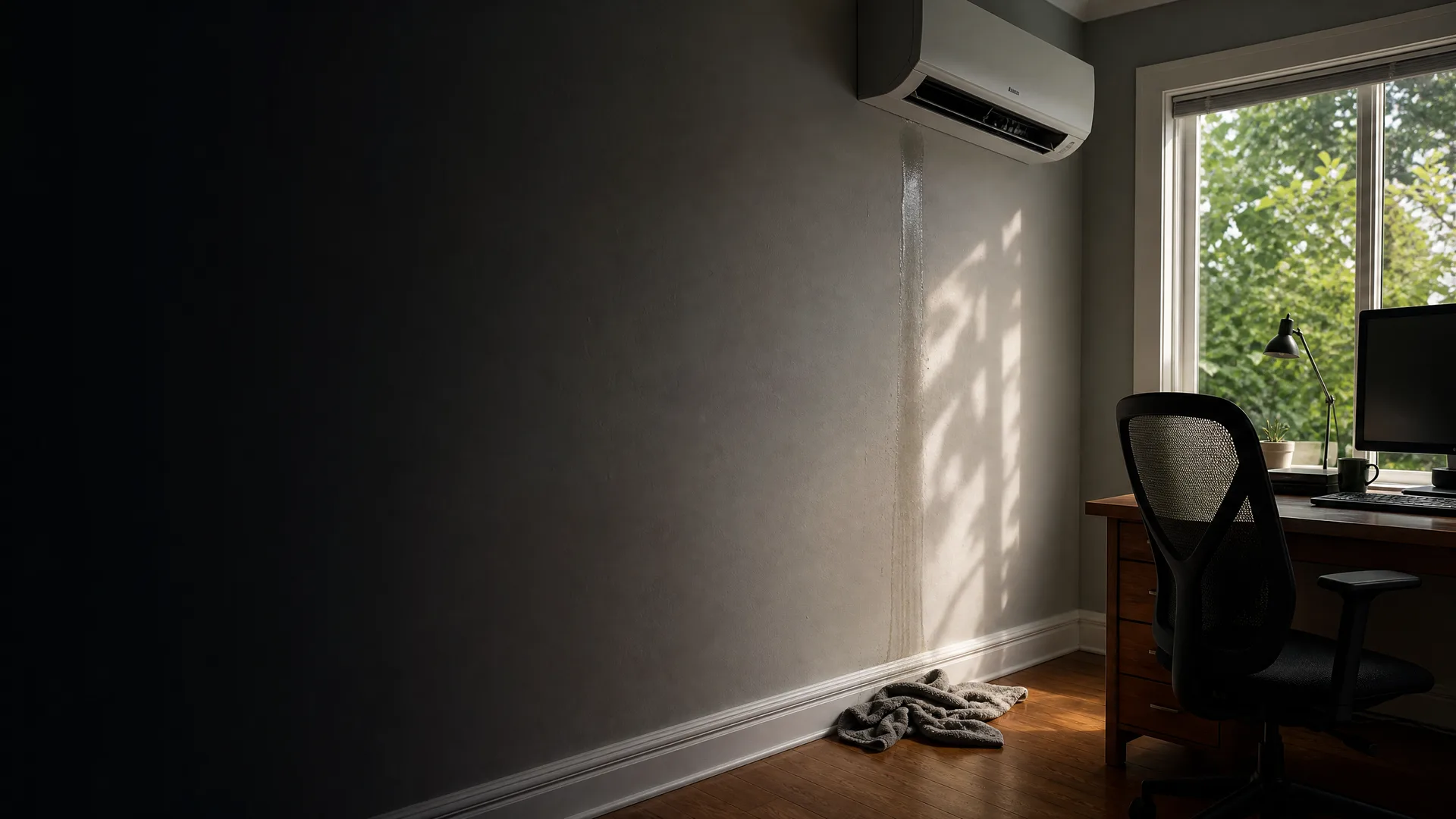
A wall-mounted mini-split air conditioner in a dim room, with a water streak running down the wall below it to a towel on the floor near the baseboard, beside a desk, office chair and monitor by a window.

You're at your desk in the home office on a warm July afternoon, windows closed, mini split running because the air outside is thick even without the usual New Hampshire mugginess. You glance up and notice a dark streak down the wall below the indoor unit, the paint gone soft and darker along the edge. A towel is already down on the floor, damp where it caught what dripped before you knew to put it there. The unit's still blowing air, still sounds fine, but water shouldn't be coming from inside it. You stand there a second, looking at the wall, wondering how long it's been doing this before you saw it.

Get the right pro for your mini split

Send the request today and stop worrying about who to call.

Asking costs nothing, and the choice to hire stays yours.

  1. Thermostat calls for heat and signals the outdoor compressor to start.

  2. The reversing valve shifts to route refrigerant in the heating direction.

  3. The compressor pumps refrigerant outside to pull in heat from the outdoor air.

  4. Hot refrigerant gas moves inside and the indoor coil releases that heat.

Is this your mini split right now?

Set to heat, but the wall unit is pushing out air that feels no warmer than the room, or outright cold. The outdoor unit might be running fine, fan spinning, no obvious problem there. Inside, you may hear the system cycle on and off more than it used to, trying to catch up. Some households notice frost building on the outdoor coil even though the thermostat says heat. If this keeps running on oil-heat backup without getting looked at, you're paying for electricity that isn't doing the job, on top of the oil that is. Left alone through a full winter, a reversing valve that's stuck can get worse rather than fix itself.

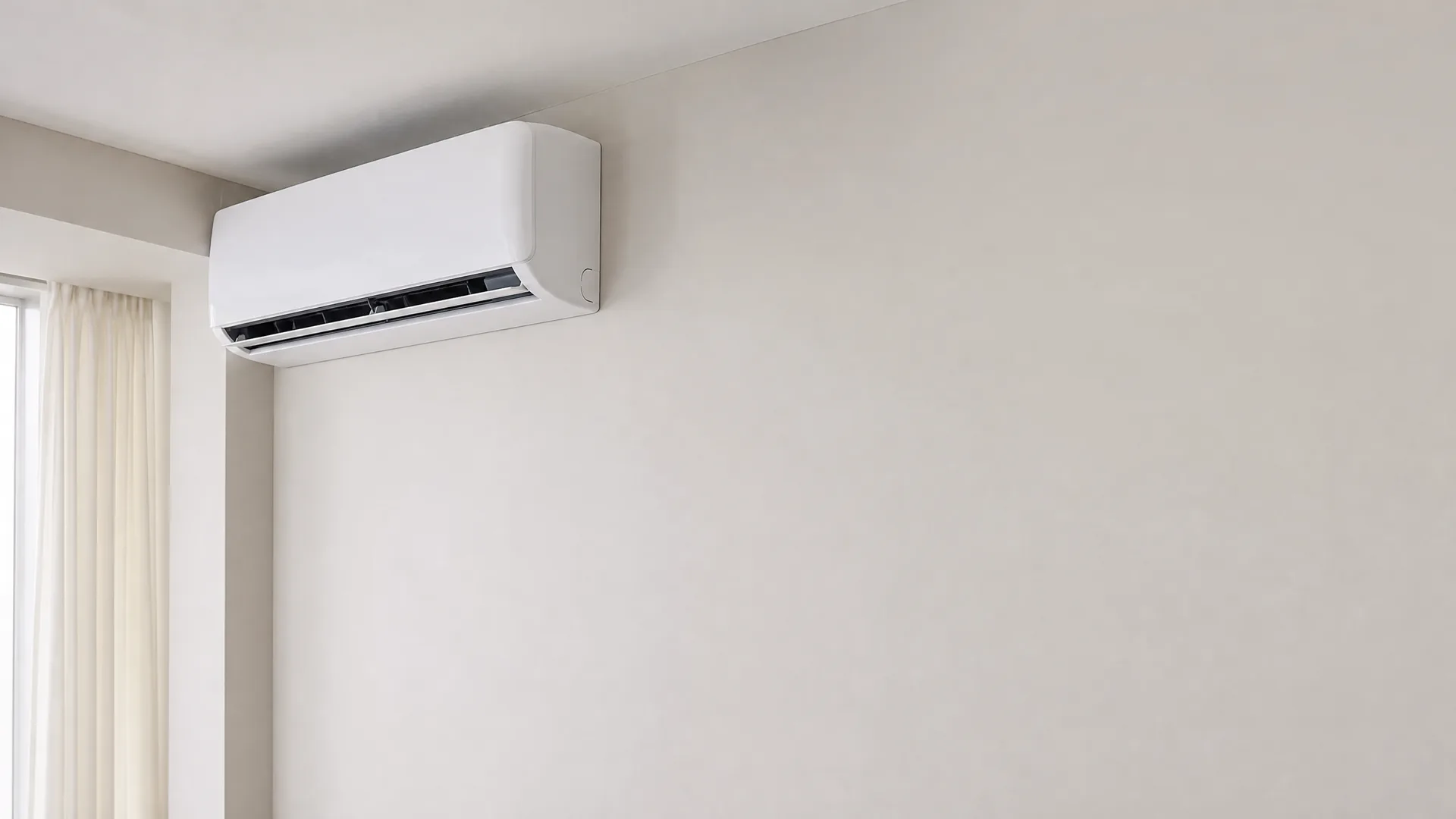
A white wall-mounted mini-split air conditioner near the ceiling of a room with plain beige walls and a pale curtain at the left edge.

Running on refrigerant alone

A mini split low on refrigerant can still blow air, just not warm air. The compressor keeps cycling, the fan keeps spinning, but there isn't enough refrigerant moving through the coil to pull heat from outside and carry it in. You'll notice the wall unit running longer than it used to, and the oil furnace picking up more of the load than it should on a day that isn't even that cold.

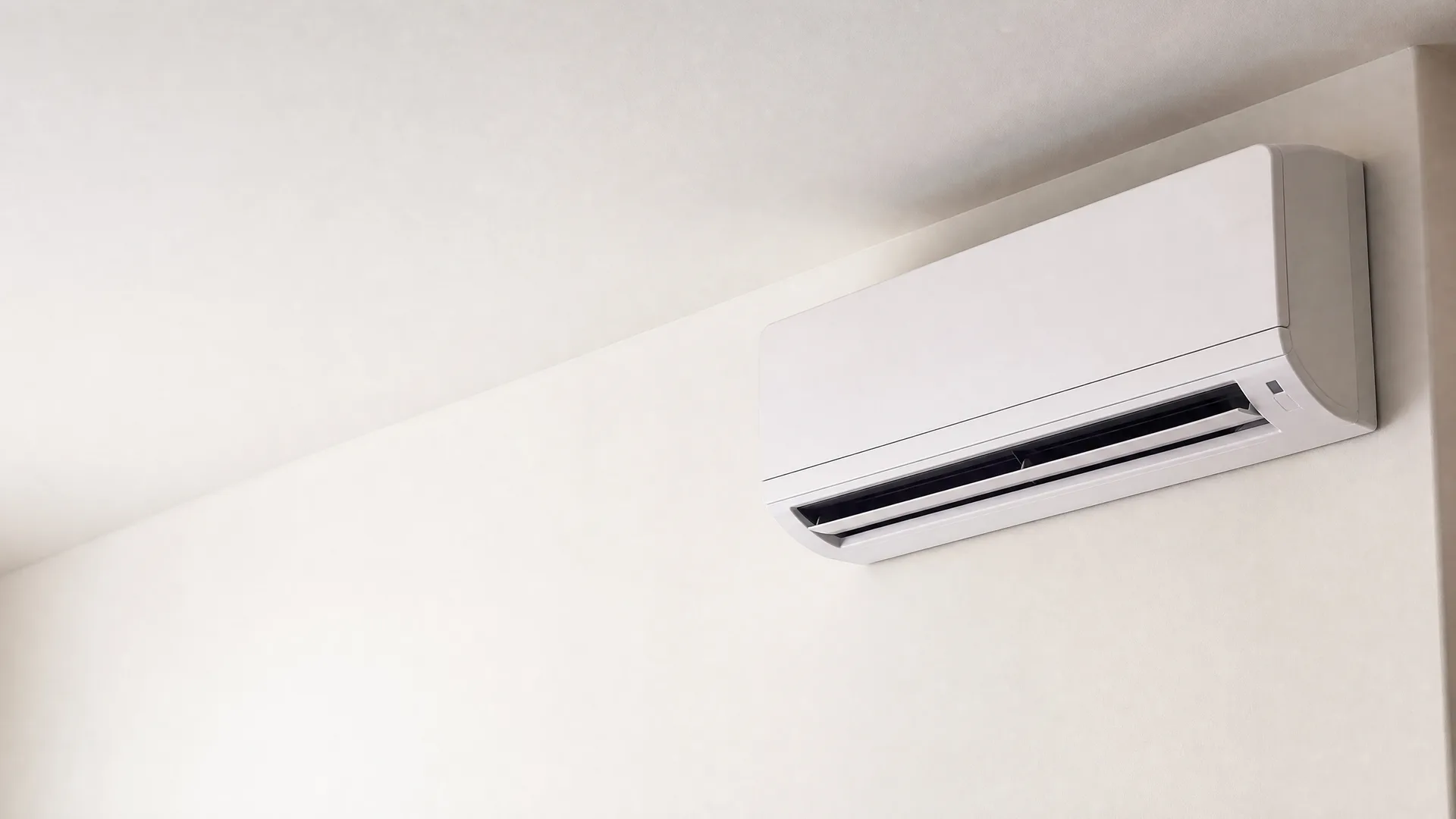
A white wall-mounted mini-split air conditioner indoor unit installed near the ceiling on a plain off-white interior wall.

Running the way it should

A mini split with a full charge and a reversing valve that shifts clean puts out air at the wall that's noticeably warmer than the room, within a few minutes of a call for heat. It holds that output through the coldest stretch of a New Hampshire winter without leaning on the oil furnace to make up the difference, and it cycles off once the room hits the thermostat setting instead of running nonstop.

Can a dirty air filter make my mini split blow cold air?

You keep the filter clean because you know that matters, so it's a fair thing to wonder before you assume the reversing valve or the refrigerant is the problem. A dirty filter is the easier, cheaper thing to rule out first, and it's worth knowing what it actually does and doesn't explain about air that's coming out cold instead of warm.

A dirty filter cuts output, but it won't turn warm air cold

A clogged filter chokes airflow across the indoor coil, so the unit struggles to move heat into the room and you feel weak, lukewarm air at the vents. That's a real problem and worth fixing on its own. But a dirty filter doesn't make the system run backward. If what's coming out is genuinely cold, not just weak, the cause is upstream of the filter: the reversing valve not switching over, or the refrigerant charge too low to carry heat in from outside. Pull the filter and check it anyway. If it's gray with dust, clean it. If the air is still cold after that, the problem is in the refrigerant cycle, not the airflow.

A single-story house with gray vinyl siding, dark shingled gable roofs, and white-trimmed windows, set behind a partly dry green lawn under a clear blue sky.

New Hampshire summers don't carry the heavy, sticky air you get further south. Averaged across June, July and August, the dew point here runs 59°F, based on NOAA climate data, which is on the comfortable side. That matters for a mini split that's actually struggling to heat, not cool. Because the air isn't that humid, the indoor coil isn't pulling much moisture out when the system runs in cooling mode, so there's less of an obvious clue there. What you'll notice instead is just cold air at the wall when you've got it set to heat, with nothing else to point to. The outdoor unit sounds fine, the fan's spinning, but the valve or the refrigerant charge is the real problem, not the weather outside.

NASA POWER T2MDEW county cells weighted by homes

A bearded man in a blue and brown plaid flannel shirt stands indoors looking out a window at snow-covered trees, with a ceramic mug on the windowsill.
A man in a blue T-shirt sits on a light gray sofa, laughing while looking at an open laptop in the foreground, with a framed picture, lamp and potted plant behind him.

Power costs 24.53 cents per kilowatt-hour statewide

At that rate, a mini split stuck running backward or low on refrigerant costs you more every day you let it ride. It's drawing power to move heat it can't deliver, or cooling a room that's already cold. Getting the valve or charge fixed stops that waste fast.

EIA-861 2025 statewide residential average

A white wall-mounted mini-split air conditioner on a light gray wall in an empty room with dark wood flooring, white baseboards, a tray ceiling with recessed lights, and a window at the left.

Running clean

The filter's clear, the coil's clean, and warm air comes off the wall unit steady when the thermostat calls for heat. The outdoor unit cycles normally and the room holds its temperature instead of drifting back down between cycles.

A wall-mounted mini-split air conditioner indoor unit with a yellowed plastic casing and dark horizontal vent louvers, installed on a plain light-gray wall.

Dust and residue

Dust sits thick on top of the unit, and dark residue has built up around the vents. Air has to push through that buildup to reach the room, and a mini split working that hard to move air is one that's due for a look before it just stops.

A woman in a cream sweater and jeans stands in the open doorway of a white stucco house, holding the dark door, while a man in a dark quilted jacket seen from behind walks toward the entry past potted plants.

Cold air on a heat call means something specific is wrong

A mini split that blows cold when it's set to heat isn't a mystery machine. It's a reversing valve stuck in the wrong position, a refrigerant charge too low to carry heat, or a filter choked enough to starve the airflow. You caught it early, which is the thing that keeps a stuck valve from turning into a dead compressor or a frozen coil you can't ignore. That's worth something in a state where oil keeps the house warm and the mini split is meant to carry the shoulder seasons without burning electricity you're already paying too much for.

Once you send the request, you're not the one who has to figure out which of those three it is or track down someone who works on these systems. A contractor who handles mini splits in New Hampshire gets matched to your situation and reaches out to you directly. You've already done the hard part by noticing the problem instead of living with it. The rest is someone else's job now.

Interior corner of a room with a window and sheer curtain at left, a gray upholstered sofa with a cushion at right, and a round wooden table holding stacked books and a round vase with an olive branch.
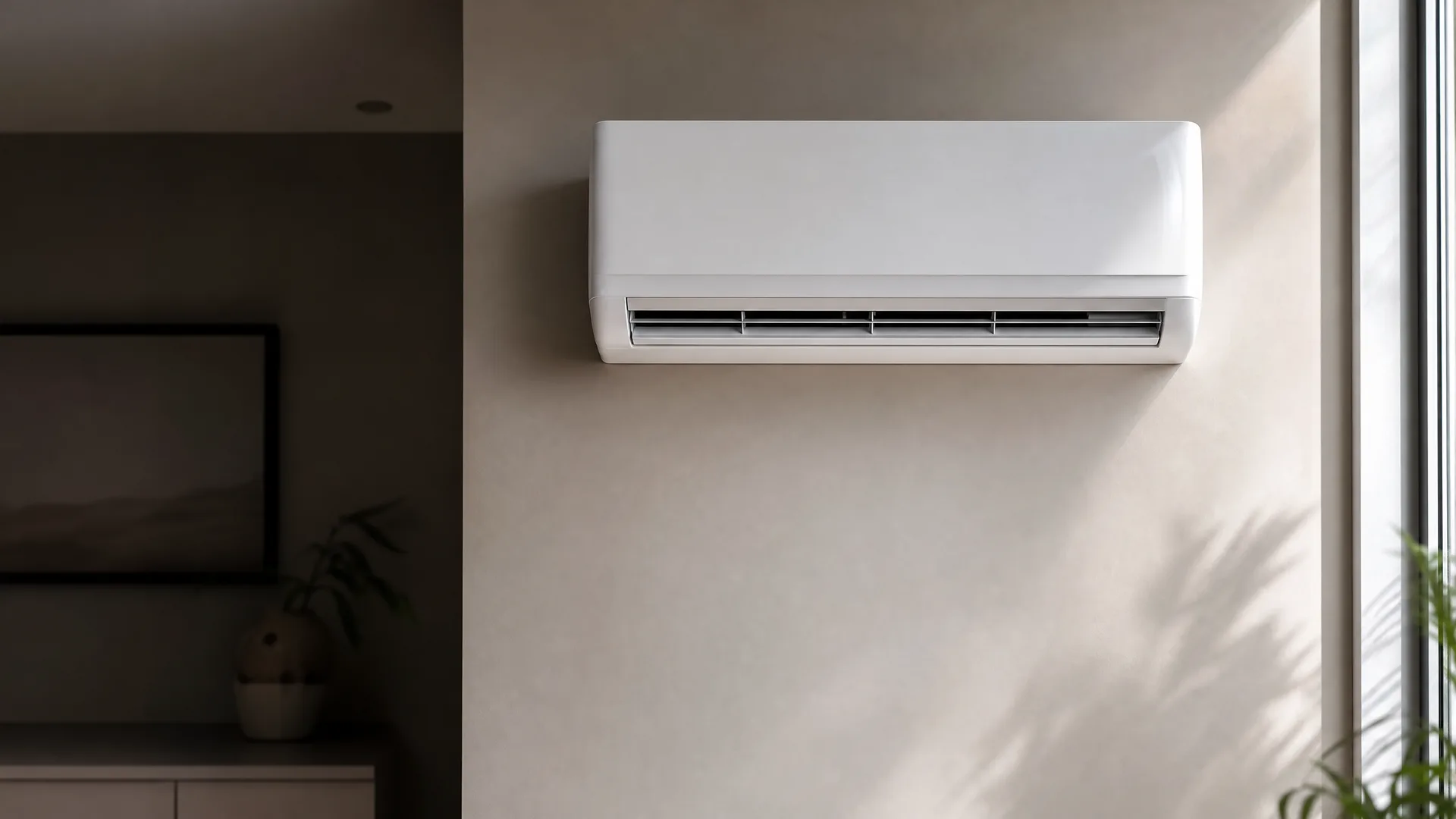
A white wall-mounted mini-split air conditioner on a plain beige interior wall, with a framed picture and potted plant in the dim left background and sunlit window with foliage at right.

A pro who works on mini splits

Step 1 of 3: Equipment