Running clean
A mini split that gets looked at every year pulls air through a clean filter and a clean coil. It reaches the temperature you set without straining, and in a state where power costs what it does, that matters on the bill.
Matched to your mini split job
A tune-up on a mini split means a contractor checks the indoor and outdoor units, cleans the coils and filters, checks the refrigerant charge, and makes sure drainage and electrical connections are sound. With power costs what they are in New Hampshire, a unit that's fallen out of tune runs harder than it should. Skip the calls around town and let a contractor who knows these systems reach out to you.
Get a local proA mini split tune-up covers the indoor head and the outdoor unit together, since the system only works as a pair. The contractor cleans the filters and the indoor coil, because a dirty filter makes the unit work harder to move the same air. Outside, the coil gets cleaned too, and that matters most going into winter, since a heat pump pulls heat from outdoor air even in the cold and ice or debris on that coil cuts into how well it can do that. The refrigerant charge gets checked, since low refrigerant forces the compressor to run longer for less heat or cooling. The drain line and electrical connections get checked as well, since a clogged drain can back up into the wall and loose wiring can trip the unit off. For a system you lean on through a New Hampshire winter, catching these early keeps it running the way it's supposed to.

A mini split that gets looked at every year pulls air through a clean filter and a clean coil. It reaches the temperature you set without straining, and in a state where power costs what it does, that matters on the bill.

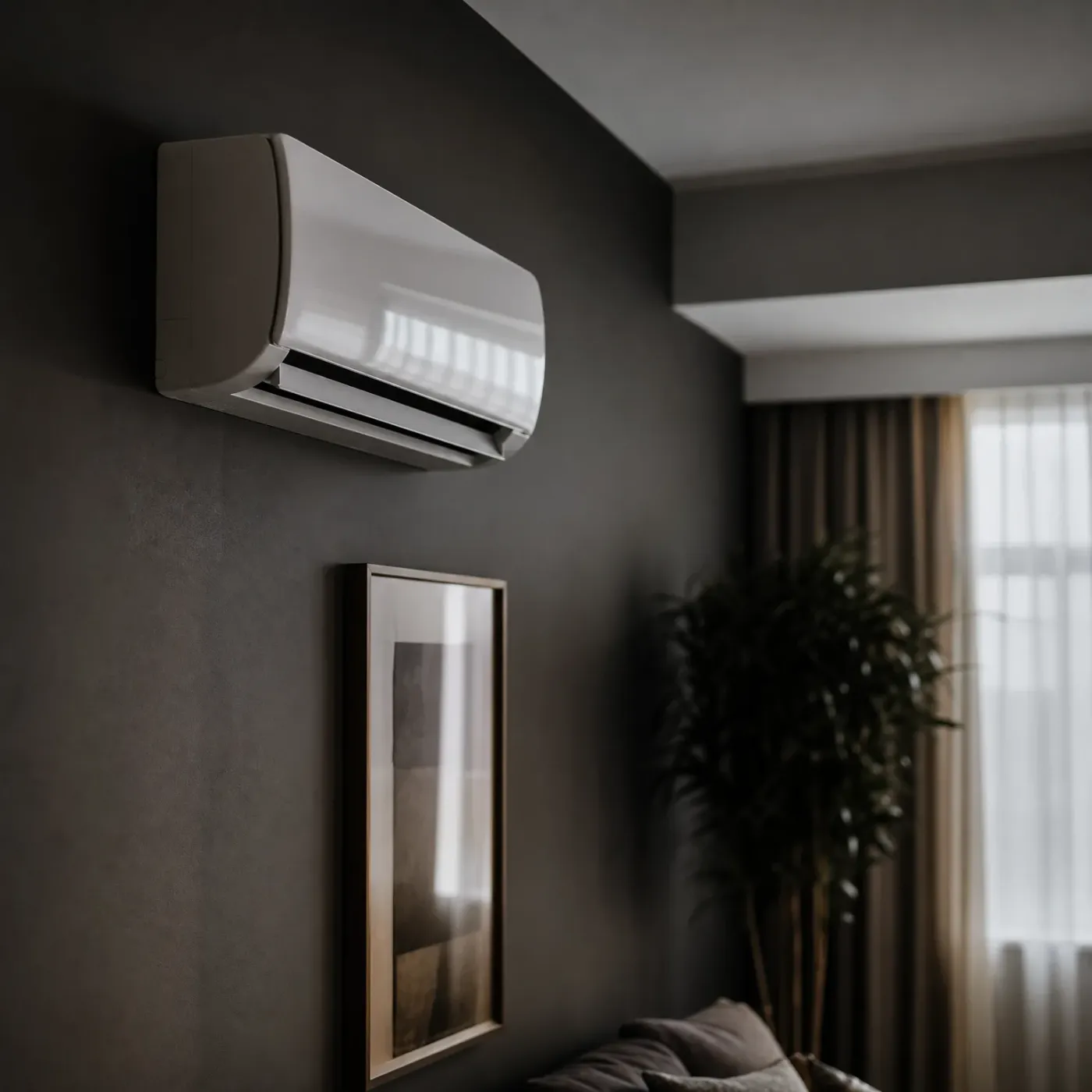
Dust like this across the casing and vents usually means it's built up inside too. The coil underneath is likely coated the same way, and a blocked coil makes the unit run longer to do the same job.
Refrigerant charge is the part of a tune-up you can't see for yourself, so it's fair to wonder if it actually gets checked or if that's just a line on a checklist. A mini split that's low on refrigerant will run longer to hit the same temperature, and in New Hampshire, where electricity isn't cheap, that shows up on the bill before you notice anything else wrong.
A contractor checks refrigerant pressure at the outdoor unit using gauges connected to the service ports, then compares the reading against what the system is rated for. A mini split that's low almost always has a leak somewhere in the line set, since refrigerant doesn't get used up the way oil or fuel does. If the charge is off, the right fix is finding where it's escaping, not just adding more. Running low for months at a time makes the compressor work harder than it should, and a compressor is the most expensive part of the system to replace. Checking this every year catches a slow leak before it turns into a bigger repair.
The contractor cuts power to both the indoor head and outdoor unit.
The filters come out and get washed or swapped.
The indoor coil gets brushed and rinsed clean of dust.
The blower wheel is wiped down to clear caked-on grime.




The same filter and coil handle New Hampshire's warm summer stretch and whatever heat you run on the coldest days. A tune-up checks both before each one starts.
If your mini split is a secondary system here, it can sit unused for months. A contractor checking it once a year catches problems before you need it.
You might notice the air coming out of the head feels weaker than it did last summer, or the unit runs longer to hit the same temperature. Sometimes there's a musty smell when it kicks on, or a thin layer of dust visible on the grille when you look close. You might hear it cycling more than it used to, on and off, on and off, trying to keep up. A little water pooling near the indoor unit or a drip outside where there shouldn't be one is the drain line telling you something. None of this means the system is failing. It means it's working against dirt instead of air, and a unit that strains costs more to run every month it goes unchecked, which matters more here than almost anywhere given what New Hampshire pays for power.


Answer a few questions instead of calling shop after shop.
You only hire the pro if you want to.
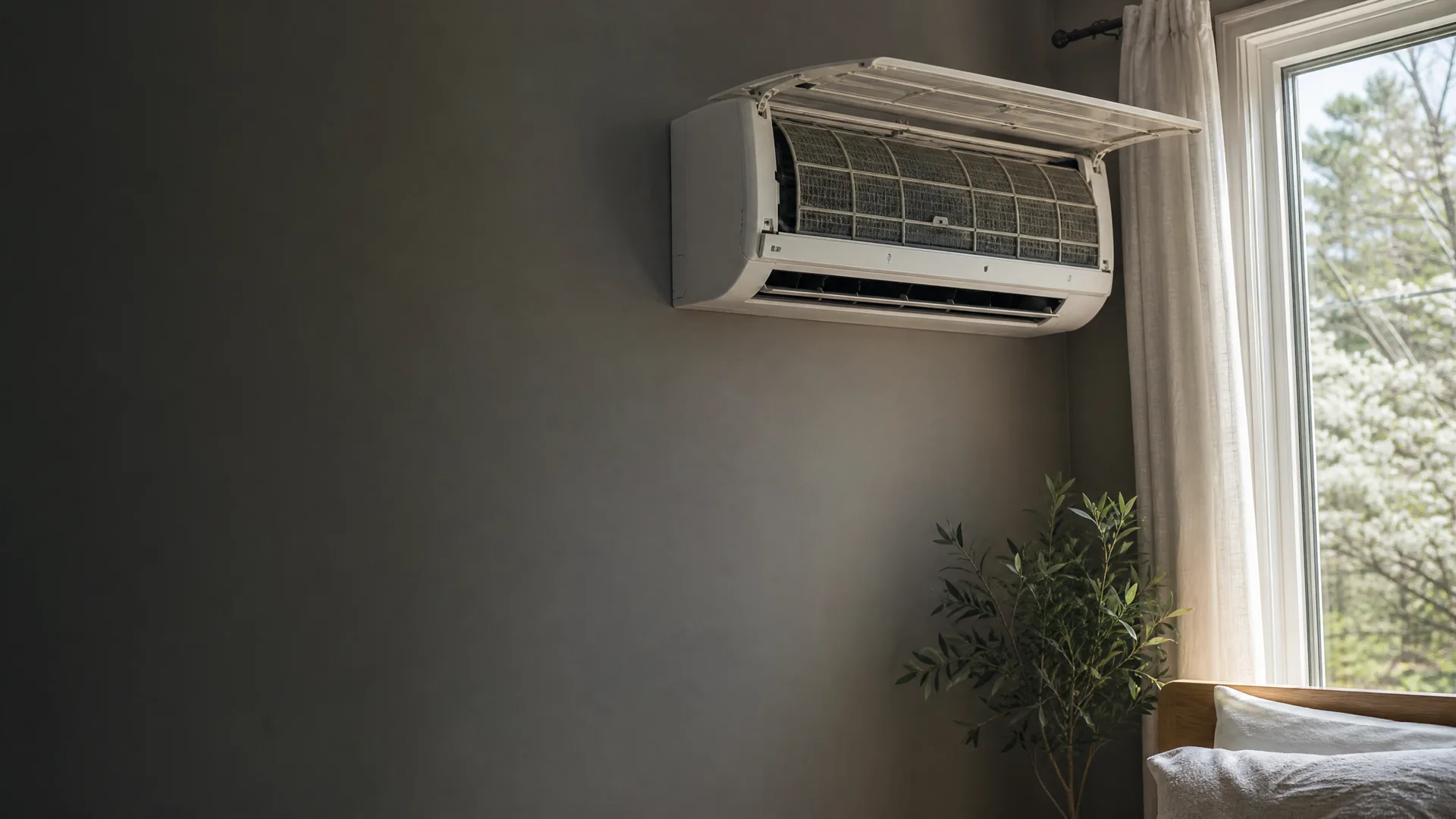
It's a warm afternoon in May, the kind where New Hampshire still feels mild enough to leave the windows cracked. You pop the front cover off the bedroom mini split before the real heat sets in, the way you do every spring. The filter screen slides out grey and matted, more dust than mesh. You hold it up to the window light and can't see through it. Last August this room never quite got as cool as the rest of the house, and now you know why. You set the filter in the sink to rinse, thinking about the stretch of months ahead when this unit will run every day the sun is out.



A summer dew point averaging 59°F across New Hampshire, based on NOAA climate data, sits on the comfortable side. The air doesn't sit heavy the way it does further south, so your mini split isn't fighting to wring moisture out of every room all summer. That matters for a tune-up, because a unit here spends less of its summer pulling double duty on humidity and more of it just moving air through whatever filter and coil you've got. A clean filter does that job with ease. A clogged one still struggles, dew point or not, and you'll hear it in a blower that runs longer than it should to cool the same room.
NASA POWER T2MDEW county cells weighted by homes

A mini split tune-up means someone opens both units, cleans what collects dust, and checks what you can't see yourself: the refrigerant charge, the drainage, the electrical connections. That's the whole answer. Whether it gets done is what decides if your unit runs the way it did when it was new or works harder every year for less.
You don't have to track down who does this well in your part of New Hampshire, call around, and explain the same thing about your system three times to three different people. Answer a few questions about your mini split and what you're looking for, and a contractor who covers your area follows up with you directly. The checking and comparing is the part that goes away. What they find when they open the unit is still theirs to tell you.


Get the right pro for your mini split