Should a mini split run all winter in New Hampshire
After this form, you can stop searching for a mini split pro.
Yes, a mini split can run all winter in New Hampshire, down to whatever temperature its cold climate rating holds. Plenty of homes here keep one going right through January alongside the oil furnace, using the mini split for the shoulder months and the coldest stretches where the furnace takes over.
Running it that hard changes what it needs. A unit working from October through April is pulling double the hours of a cooling only setup, and the outdoor coil has to shed frost constantly to keep working. If that coil is dirty or the defrost cycle is struggling, the system loses efficiency fast, and on power priced the way it is in New Hampshire, that loss shows up on the bill every month, not just once.
Oil heat makes the mini split's running cost matter more, not less. If you're leaning on it to cut down oil use, a unit that isn't maintained will eat into those savings without you seeing why. The filters, the coil, the condensate line and the refrigerant charge all need a look before the heavy months, not after something stops working.
Finding someone who services mini splits specifically, who knows cold climate units and not just standard heat pumps, usually means a string of calls: checking who's licensed, who works on your brand, who can explain a defrost cycle problem instead of guessing at it, then comparing what each one quotes. That part ends once you send the form here. From there, getting matched with someone who services these units in New Hampshire isn't something you have to chase down yourself.
Should I run my mini split all winter in New Hampshire?
You've got a mini split and an oil furnace, and you're trying to figure out which one should actually be running once the cold sets in. Some neighbors swap over to oil entirely for the winter. Others leave the mini split on and let it carry a good share of the load. You want to know which approach makes sense, or if it's really a choice you have to make at all.
Run both, and let the mini split carry what it can
A cold climate mini split keeps producing heat well below freezing, so there's no reason to shut it off once the temperature drops. The question is really how much of the load you want it carrying. Oil gets expensive to run, and with power here among the priciest in the country, the cheaper path usually comes from splitting the work: mini split on the milder days and through the shoulder months, oil furnace picking up when it's deep cold outside. Running the mini split hard all winter without a tune-up beforehand is where people get into trouble. A unit working overtime on a dirty filter or a low charge loses efficiency fast, right when you're leaning on it most.
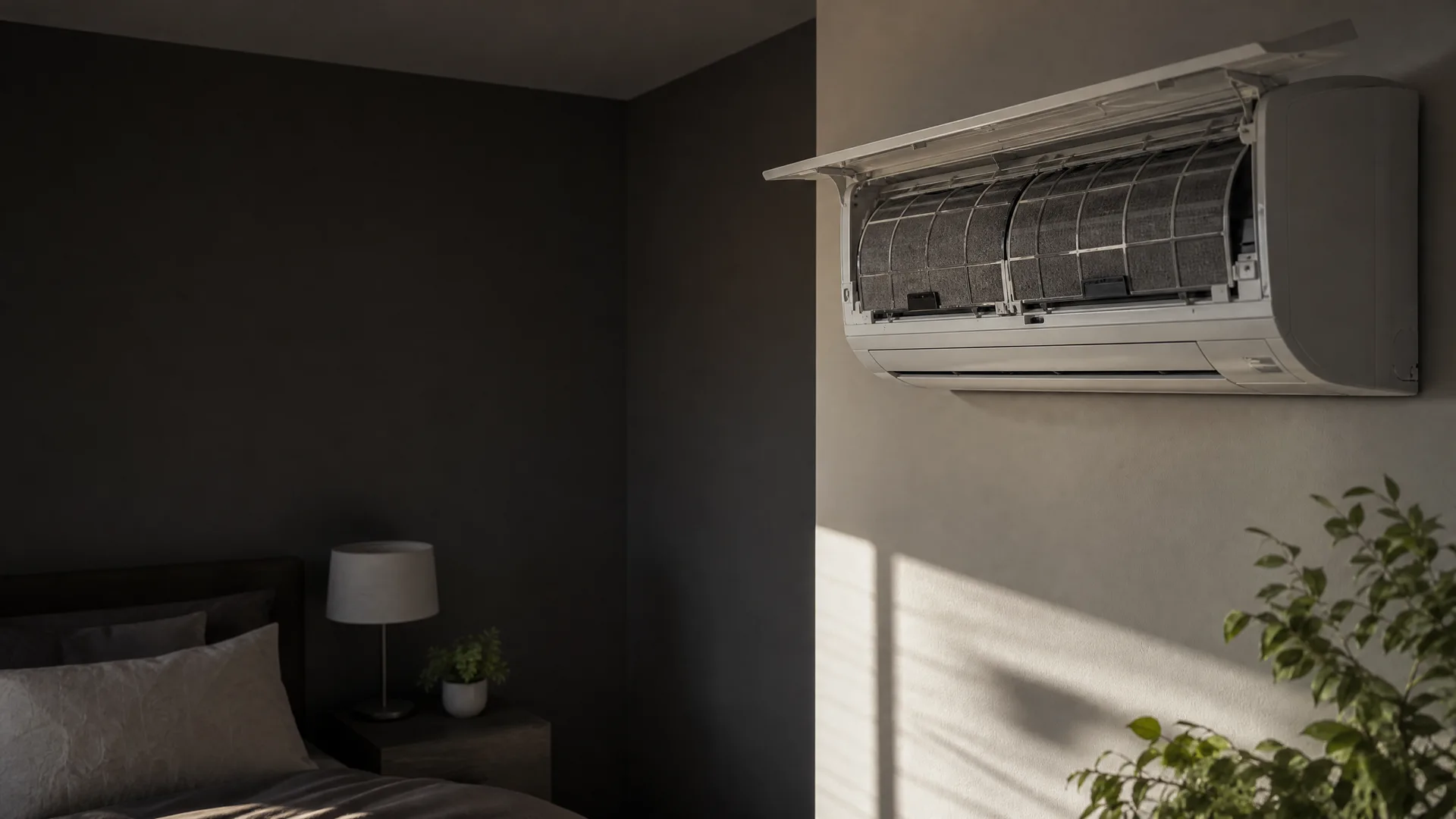
Spring, finally, and the afternoon sun is in the bedroom window. You've pulled the front cover off the indoor unit before switching it over from heat to cool for the season, the way you do every year. The filter screen comes out grey with dust, more than you expected after a winter of it running alongside the oil furnace. You hold it up to the light from the window and you can't see through the mesh in places. It's been sitting behind that cover since October, pulling in whatever the room gave it while you weren't looking. You set it by the sink to rinse off, thinking about how long it's actually been since you last did this.
Running a mini split against New Hampshire's cold all winter asks more of it than cooling ever does. The outdoor unit is pulling heat out of air that might be in the teens or lower, and it has to defrost itself over and over to keep doing that. A coil that's dirty or a defrost cycle that's not working right loses you efficiency fast, right when oil is already expensive to fall back on and power here costs more than most of the country. You'd notice it as higher bills before you noticed anything else wrong. Checking that the unit is actually ready for that kind of winter, not just assuming it is, means someone looking at the coil, the refrigerant charge, the drain line before the cold really sets in. That's not a call you have to make yourself, then a second call, then another, describing the same mini split and the same furnace setup each time. Send the request once and that part of it is off your plate.
What a cold climate rating actually covers
A cold climate mini split is rated to keep producing heat down to around minus 5 or minus 15 depending on the model, but that rating assumes the coil and filter are clean. Dust on the indoor coil and a clogged filter make the system pull less heat out of the same cold air, so it leans harder on backup heat strips or runs longer to hit the same temperature. The outdoor unit has to defrost itself through the night in a New Hampshire winter, and a coil that's already dirty on the outside holds frost longer each cycle. None of this shows up as a fault code. It shows up as a higher bill, and with power priced the way it is here, that difference is worth catching early.
Oil and the mini split rely on different parts
If your home heats with oil alongside the mini split, the two systems don't share any of the same maintenance. The oil furnace has its own filter, nozzle and burner to keep clean. The mini split has its indoor coil, its filter screen and its outdoor unit, all separate concerns with their own schedule. Running the mini split through the cold months instead of shutting it down for the season means it's drawing dust and whatever's in the air for more months than a cooling-only setup would, so the coil and filter earn their cleaning sooner rather than later. Checking one system off the list doesn't tell you anything about the other.
Run the mini split alongside the oil furnace and it carries the mild days, the 40s and low 50s, while the furnace takes over once temperatures drop hard. Each system does the part it's better at.
Switch over to oil-only for the winter and the mini split sits idle for months, but a system that isn't moving refrigerant or air is also not collecting the dust and strain that maintenance would otherwise catch early.
Running clean through winter
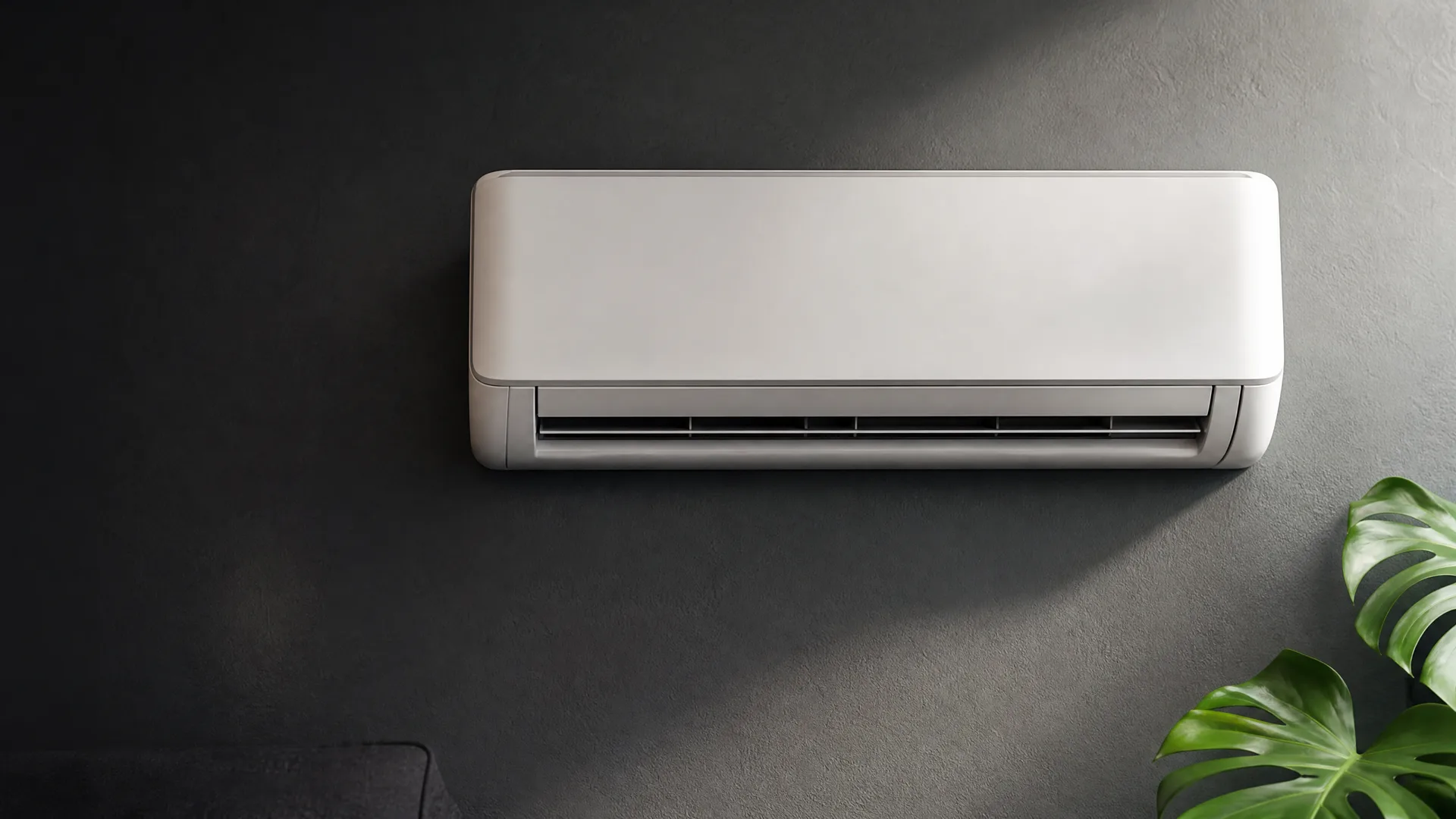
This is what a mini split should look like whether it's heating or cooling. The casing is clean, the grille is clear, and air moves through it without resistance. A unit kept like this holds its cold climate rating and defrosts the way it's supposed to, all winter long.
Neglected and struggling
That discoloration isn't just cosmetic. Dust that thick on the casing means dust on the coil behind it, and a coil that dirty can't pull heat out of cold air the way it's rated to. In a New Hampshire January, that's the difference between backing up the furnace and barely keeping up with it.
Power costs 24.53 cents per kilowatt-hour statewide
At 24.53 cents a kilowatt-hour, every hour your mini split struggles through winter costs you more here than almost anywhere else. A dirty coil or filter makes it work harder to pull heat from cold air, and that extra draw shows up on your bill before you'd notice anything else wrong.
EIA-861 2025 statewide residential average
Before you get your mini split maintenanceAfter you get your mini split maintenance
Summers here don't feel heavy. The average dew point across June, July and August is 59°F, based on weather data for where New Hampshire's homes sit, and that's the kind of air most people call comfortable rather than sticky. That matters for your mini split because it's not fighting moisture the way units further south are. It cycles less to pull humidity out of the air, so the coil stays drier and dust has less to stick to. The tradeoff is that winter is where the unit earns its keep, and a coil that went into December clean holds its output better than one that didn't.
NASA POWER T2MDEW county cells weighted by homes
A mini split can run all winter in New Hampshire, and plenty of them do, carrying the mild days while the oil furnace takes the hard cold. What decides whether that works out is whether the coil and filter are clean enough to let it hold its rating. That's a maintenance question, not a weather question. Left alone, a dirty unit still runs, just harder, and at 24.53 cents a kilowatt-hour that difference shows up fast. Instead of calling around to find someone who services mini splits, checking who's licensed, explaining the setup and the oil furnace alongside it, and sorting through quotes on your own, you can send one form and let someone else carry that search. You still decide what gets done to your system. You just stop being the one who has to track down who can do it.