Tell us about the job
Takes about a minute. No obligation.
A contractor diagnosing a mini-split repair here starts by accounting for how little the compressor actually runs. Homes in Belknap County, NH run cooling in a single month of the year, July. Compressors that sit idle through most of the calendar develop their own failure patterns: seals dry, refrigerant migrates, and the first startup of summer stresses parts that have gone cold and still for months. A fault that appeared in July was likely building through the off-season, not driven by excessive runtime. Contractors who skip that history quote the wrong fix.
Much of this county's housing was carrying oil heat or electric baseboard long before a mini-split ever went on its walls. Half the homes in Belknap County, New Hampshire were built in 1979 or earlier (2020-2024 ACS 5-year). That history matters for repair work in a specific way: when a contractor opens a head unit or pulls an outdoor compressor apart, what they find reflects the age of the equipment, not the age of the house. A mini-split installed into an older home still fails the way mini-splits fail, and the parts it takes are the parts its manufacturer made, not whatever was common when the foundation was poured. The house is old; the repair problem is in the refrigerant circuit, the control board, or the condensate drain.
The Parts of a Mini-split a Contractor Checks During a Repair
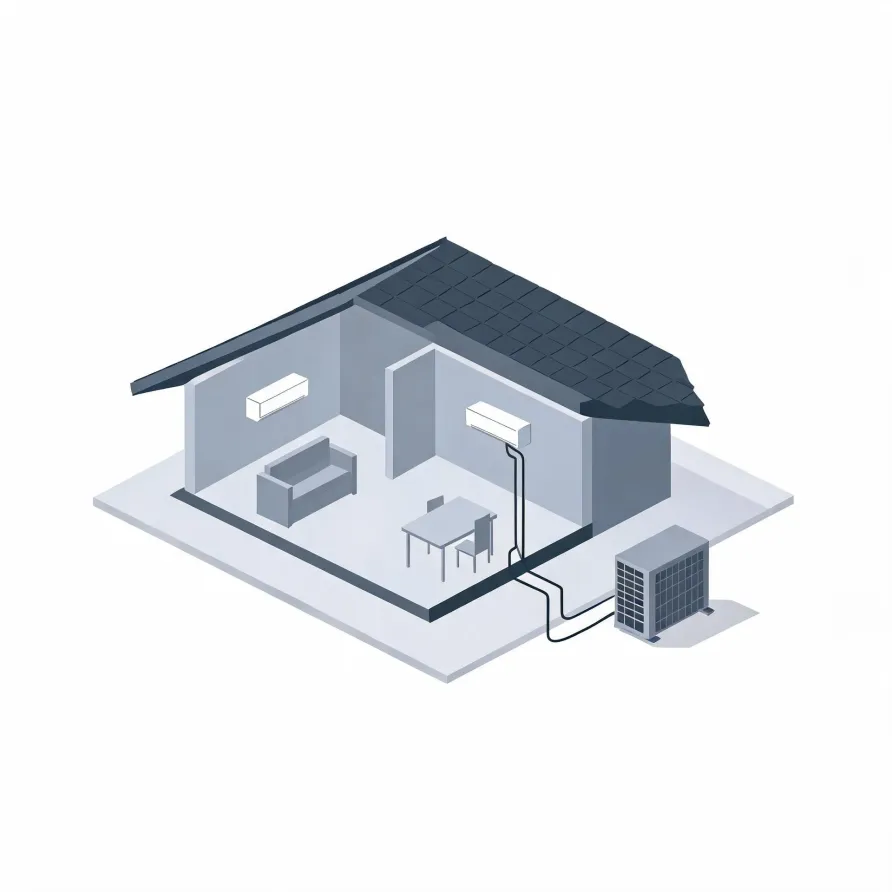
The indoor air handler mounts high on a wall inside the room and is the piece a homeowner notices first. It draws in room air, runs it across a coil, and pushes conditioned air back out. When this unit is the problem, symptoms tend to show up right there: weak airflow, ice on the coil, or air that smells wrong.
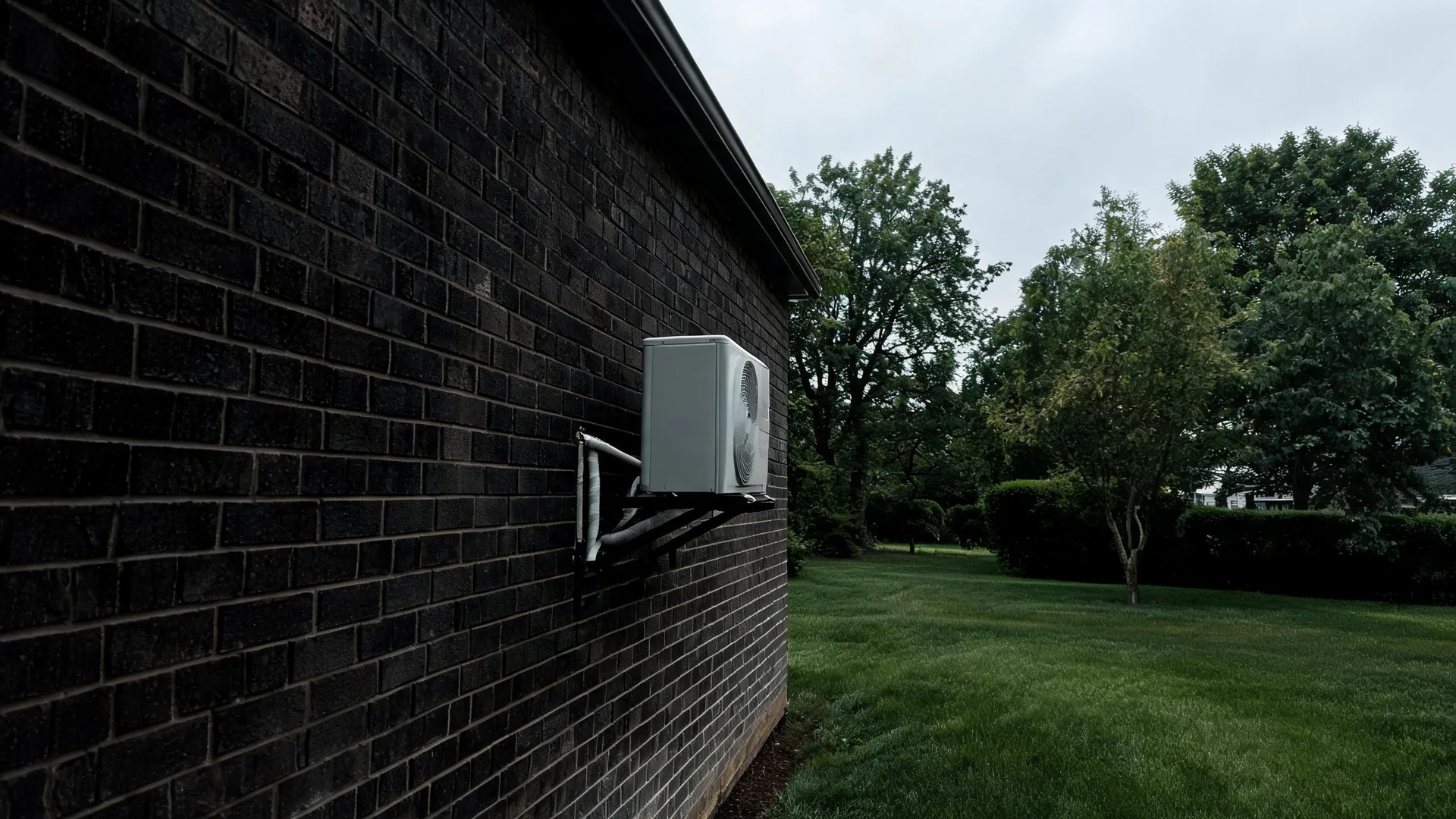
The outdoor condenser sits outside the house and holds the compressor, the coil that faces the open air, and the fan that moves air across it. A refrigerant line set and a condensate drain run between the two units, bundled along the exterior wall. The compressor and the outdoor coil are often where a contractor looks when the indoor unit seems fine but the system still will not perform.
The drawing shows a typical layout, and a licensed contractor determines which components and conditions apply to your specific home.
Find a contractor in Belknap CountyBelknap County, by the numbers
96 severe weather events were recorded in Belknap County, New Hampshire between 2015 and 2024.
NOAA National Centers for Environmental Information, Storm Events Database, bulk CSV export, events 2015-01-01 through 2024-12-31.Half the homes in Belknap County, New Hampshire were built in 1979 or earlier (2020-2024 ACS 5-year).
U.S. Census Bureau, 2020-2024 American Community Survey 5-Year EstimatesBelknap County, New Hampshire holds 39,003 housing units (2020-2024 ACS 5-year).
U.S. Census Bureau, 2020-2024 American Community Survey 5-Year EstimatesOwners occupy 80.1% of the occupied homes in Belknap County, New Hampshire (2020-2024 ACS 5-year).
U.S. Census Bureau, 2020-2024 American Community Survey 5-Year EstimatesRepair Rules & Codes Governing Mini-Split Work in Belknap County, New Hampshire2 sourced rules and standards
Licensing Rules for HVAC Repair in Belknap County, New Hampshire
New Hampshire's mechanical licensing board issues nine credentials — hearth system, four fuel gas endorsements, domestic appliance technician, and master, journeyman and apprentice plumber — and a licensee may not work outside the specialty their licence names. None of the nine is an HVAC licence.
New Hampshire does not license HVAC as a trade, and says so where it matters: the plumbing licence expressly does not reach a person installing heating, cooling, air conditioning or domestic water heating systems, whether solar, oil, gas or electric. The gas piping on a gas-fired system is a separate matter and needs a fuel gas fitter licence.
Weather Pressure on HVAC Equipment in Belknap County
Heating and cooling equipment in Belknap County runs against whatever the local climate delivers, and that workload shapes how often repairs become necessary. A contractor who knows this area knows which failure patterns follow the hardest weather.
96 severe weather events, 2015–2024. Source: NOAA National Centers for Environmental Information, Storm Events Database.