NH Mini Split Network
Profile view of a bearded man wearing a dark green baseball cap and a dark gray T-shirt against a plain light background.

Is a mini split cheaper than baseboard heat in New Hampshire

Step 1 of 3: Equipment

Running your mini split costs less than baseboard heat most months, because baseboard is electric resistance heat and a mini split moves heat instead of making it, so it gets more warmth out of the same electricity. Where that changes is on the coldest nights. Below roughly 5 to 15 degrees, depending on the unit, a mini split has to work harder to pull heat from outside air, and some models lean on backup electric strips that use power the same way baseboard does. In New Hampshire, that covers some real stretches of winter. Most homes here still heat with oil, and the mini split usually isn't the only thing keeping the house warm. Used alongside the oil system, set to carry the load on normal days and step back on the coldest ones, it still comes out ahead of running baseboard around the clock. Whether that math holds up for your place depends on how your unit is sized and where it's installed.

A white wall-mounted mini-split air conditioner unit installed high on a light gray interior wall below crown molding, with a bamboo-shaded window at the lower left.
A mini split sized right and maintained holds its efficiency, so it keeps costing less than baseboard through most of an oil-heated New Hampshire winter.
A wall-mounted mini-split air conditioner indoor unit with a dusty, discolored cover, installed near the ceiling on a plain light-colored wall.
A neglected mini split, filter clogged and coils dirty like this one, loses efficiency fast, and on the coldest nights baseboard can win out.
A man in a gray sweater reclines in a brown leather armchair with his eyes closed, beside a wooden side table holding a mug, a folded newspaper and a potted plant, with a bookshelf and sunlit window behind him.
A man with greying hair and a dark sweater leans back on an armchair with his eyes closed and a slight smile, in a living room with a bookshelf, plant, folded newspaper and mug on a wooden table.
A man in a gray fleece jacket sits reclined in a leather chair with his eyes closed, in a room with bookshelves, a table lamp, a window, and a desk holding a folded newspaper and a dark mug.
A bearded man in a gray fleece pullover sits with eyes closed in a brown leather armchair in a living room, with a floor lamp, bookshelf, potted plants, a side table holding newspapers and a dark mug, and a bright window behind him.

Mini Split vs Baseboard: Which Costs Less

Mini split

  • It heats down to around 5 degrees before it starts losing capacity, and some cold-climate models keep working below zero.
  • The outdoor unit needs clear airflow, so snow piled against it or ice on the coil cuts its output right when you need the heat most.
  • A clogged filter or dirty coil makes it work harder for the same warmth, which shows up as a higher bill before you notice anything else.
  • It also cools your home in summer, so you aren't running a separate window unit or central AC through July and August.
  • Electricity here runs expensive, so even with the efficiency edge, a mini split pushed hard on a 10-below night can cost more per hour than you'd expect.

Baseboard heat

  • Every watt it draws becomes heat, no exceptions, so its output never drops no matter how cold it gets outside.
  • It has no outdoor unit, no coil to ice up, and nothing that loses performance in a snowstorm.
  • There's no filter to clog and almost nothing to maintain, since it's just a heating element and a thermostat.
  • It costs more to run than a mini split for most of a New Hampshire winter, because it can't move heat, only make it.
  • It gives you no cooling at all, so a home that heats with baseboard still needs another way to handle a warm New Hampshire afternoon.
A white wall-mounted mini-split air conditioner installed high on a beige interior wall below crown molding, with a window and light curtain on a black rod at right.

Clean and clear, working as it should

A mini split like this pulls its rated heat out of every kilowatt. The coils stay clear, the filter stays clean, and the air moves the way it was designed to. This is what keeps it cheaper than baseboard on most days of the winter.

A wall-mounted mini-split air conditioner indoor unit with a dusty off-white casing and dark lower vent, installed high on a plain light-colored wall below a ceiling molding.

Dust and buildup cut into what you're paying for

A coil this dirty makes the unit work harder for the same heat, and the filter behind that casing is likely just as clogged. Once that happens, the electricity bill climbs and the savings over baseboard start to disappear.

Why is one room still cold while the mini split runs

If you've got a mini split head in the living room and baseboard everywhere else, you've probably noticed the far bedrooms stay chilly while the main room gets plenty warm. That's the split doing its job in the space it was sized for and nothing beyond it. You might also hear the outdoor unit laboring on the coldest nights, or notice frost building on the coil that doesn't melt off between cycles. If the filter hasn't been pulled and rinsed in a while, you'll feel weaker airflow at the head even when the fan sounds normal. Left alone, a unit working that hard for that little output runs up your electric bill without you getting the heat to show for it, right when oil and power costs both climb.

  1. The outdoor unit pulls in heat from the outside air, even when it's cold.

  2. Refrigerant inside the lines absorbs that heat and turns to gas.

  3. The compressor squeezes that gas, which raises its temperature further.

  4. The indoor head blows room air across the hot coil to warm it.

A dusty, stained wall-mounted mini-split air conditioner indoor unit near the ceiling on a plain beige wall, with visible lint buildup at its intake grille.
Before you get your mini split installation
A white wall-mounted mini-split air conditioner installed high on a beige interior wall near the ceiling, with a white-framed window at the left edge.
After you get your mini split installation
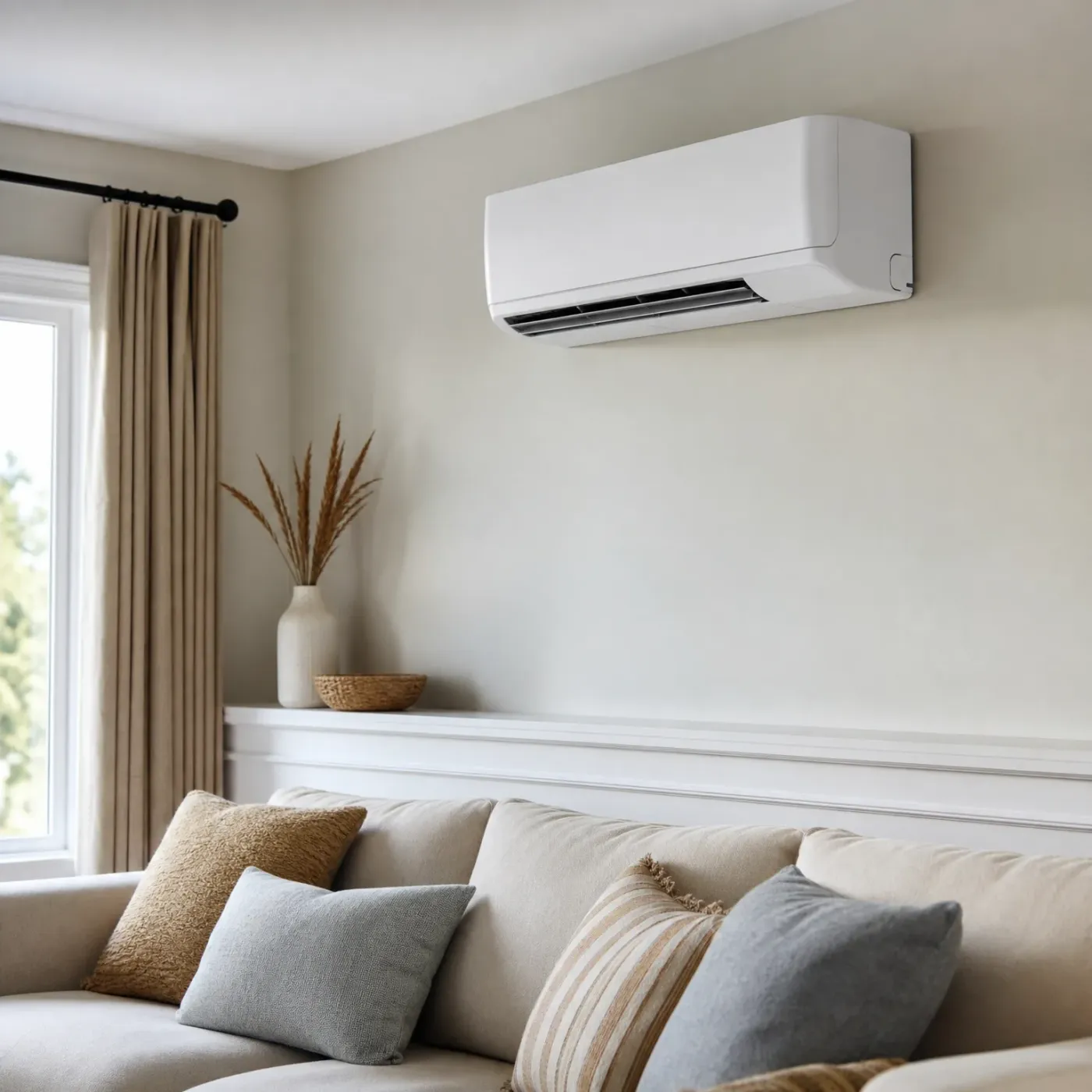
A white wall-mounted mini-split air conditioner on a pale wall above a beige sofa with assorted cushions, beside a window with long curtains and a shelf holding a vase of dried grasses and a woven bowl.

Done looking for a mini split pro

One installer gets your project, so there's no bidding war over it.

One request ends the search for a mini split installer.

Reach a local pro

Sending the form costs nothing.

Power costs 24.53 cents per kilowatt-hour statewide

At that rate, every kilowatt-hour your baseboards burn costs more than it would almost anywhere else, and baseboard uses one for every one it gives back as heat. Your mini split pulls two or three times that much warmth from the same kilowatt-hour, so the gap between the two only gets wider the higher this rate climbs.

EIA-861 2025 statewide residential average

Why the compressor struggles below zero

A mini split's compressor is built to squeeze heat out of outside air, and that gets harder as the air gets colder. Most units are rated to keep working down to around 5 degrees, and cold-climate models are built to keep pulling heat out of air well below zero. Below whatever point your unit is rated for, the compressor can't draw enough heat to keep up, and the head starts blowing cooler air even while it runs flat out. That's the point where baseboard, which just turns electricity straight into heat with no outside air involved, stops losing ground to the mini split and may pull ahead for those nights.

What a tune-up protects on an oil-heated house

In a house that heats with oil, the mini split is usually carrying part of the load, not all of it, so every degree of efficiency it loses matters twice. A dirty coil or a clogged filter makes the compressor work harder for the same heat, which narrows the gap between what the mini split costs to run and what baseboard would cost for that same room. A tech who services this equipment every winter in New Hampshire knows which models hold up in the cold and which ones start struggling early, and that's the kind of thing worth asking about before the first hard freeze.

A gray-haired man with a beard in a blue button-placket shirt reclines on a couch with his eyes closed, beside a sunlit window with a green plant.
A woman in a cream knit sweater sits in an armchair with her eyes closed near a window showing yellow autumn foliage, with a mug on a round wooden side table beside her.

So, cheaper than baseboard

  • A mini split kept clean and sized right costs less to run than baseboard through most of a New Hampshire winter.
  • The coldest nights are where that gap narrows, since baseboard holds its output and a mini split loses some as the air drops toward zero.
  • A clogged filter or iced-up outdoor unit erodes those savings faster than the cold alone does.
  • A local contractor who services this equipment every winter knows which models and settings hold up best once it drops below 5 degrees.
  • Working with one licensed contractor on the installation means a single point of contact who already knows the common failure points on these units.
  • Where you land against baseboard depends on how the system is sized, installed and kept up, not just on the thermostat setting.

Most days, yes. A mini split that's sized for the room and kept clean pulls two or three times the heat out of a kilowatt-hour that baseboard does, and with power priced the way it is here, that difference shows up on the bill every month. The exception is the stretch of real cold, when the outdoor unit is working harder for the same warmth and baseboard doesn't care how low the temperature goes. Even then, a well-kept system usually isn't losing to baseboard outright, just losing some of its edge.

What decides which side of that line you land on isn't the thermostat, it's the install. A unit sized wrong, or set up without the cold climate settings these winters call for, gives back the savings it should be earning you. That's where having one contractor matters more than it sounds like it should. Someone who works on these systems all winter, every winter, in this state, has already seen which models hold their output below zero and which don't, and which installs hold up and which end up with a tech back out mid-January. You're not fielding calls from three companies trying to win the job. You're talking to the one who already knows what tends to go wrong with this equipment here, and how to keep it from happening to yours.


A curving paver walkway runs alongside a house with beige lap siding and a white-trimmed window, bordered by low shrubs, grassy plants, and trees in sunlight.
A dark-framed casement window with divided upper panes set in a stucco wall beside a stone-clad section, with hydrangeas, hostas and trimmed shrubs in a mulched bed above a lawn.
White horizontal lap siding wall with a single six-pane double-hung window, above a mulched bed of hydrangea shrubs with browning blooms, bordered by mown grass in low sunlight.
Interior corner with tan plaster walls, a potted olive tree in a large terracotta urn beside a floor-to-ceiling window, and a wooden bench with a beige cushion on a herringbone brick floor partly covered by a woven jute rug.
A wooden bench beneath a window holds a green linen cushion and a fringed cream throw, with a woven basket stored underneath on a wood plank floor.

It's off your list after this

Your request stays with one local pro.

Find a licensed mini split pro

You're not committing to anything by asking.