Profile view of a bearded man wearing a dark baseball cap and a dark gray T-shirt against a plain off-white background.

Can a mini split heat a basement in a New Hampshire winter

Step 1 of 3: Equipment

Can a mini split heat a basement in a New Hampshire winter?

A basement stays colder than the rest of the house, and oil heat often doesn't reach it the way it does the floors above. If you're putting a mini split down there, you want to know it can actually keep up once temperatures drop into the single digits or below, not just take the edge off.

Yes, if it's a cold-climate model sized and installed for the space

A cold-climate mini split is built to keep producing heat well below zero, which matters here since New Hampshire winters routinely drop that low. The compressor is designed to keep working in that range instead of shutting down or switching to backup resistance heat the way older or standard units do. For a basement, the bigger factor is sizing: a unit matched to the room's square footage and how well it holds heat will keep the space warm, while an undersized or wrong-type unit will struggle no matter how cold-rated it is. Get the sizing and model right for the basement itself, not just for the house as a whole, and it will hold its own through January and February.

A white wall-mounted mini-split air conditioner on a beige interior wall, with a curtained window on the left and wood flooring with a light rug below.

Sized and installed for the basement's load

A mini split rated for your basement's size can hold it through a New Hampshire winter. The cold comes through the foundation walls, not just the air, so the unit has to be matched to that before it's hung.

A white wall-mounted mini-split air conditioner indoor unit installed near the ceiling on a plain light-colored wall, with its horizontal outlet vent and louvers visible.

Undersized or placed wrong, it struggles

A unit that's too small, or mounted where cold air pools near the floor, will run constantly and still leave corners cold. At minus 10, that gap shows fast, and the basement never catches up.

A woman stands in the open black front door of a white-sided house with a dark shingled roof while a man in a navy jacket approaches along the walkway, with lantern wall lights, a potted shrub, and flowering garden beds nearby.

What a cold basement costs you now

A basement that doesn't hold heat gets used less. Maybe it's a bedroom nobody sleeps in from December on, or a workshop you give up on by January. Oil doesn't travel down there well, so you're either running a space heater on your own expensive power or writing the room off until spring.

Finding someone to size and hang a mini split right is its own job: looking up installers, calling a few, describing the basement and the foundation walls to each one, then trying to compare bids that aren't quite measuring the same thing. Send this one in and skip that part. You get matched with a contractor who installs for basements like yours in New Hampshire, and they'll reach out to you directly.

Interior corner of a dining room with a round wooden table, a ceramic vase holding olive branches, a dark spindle-back chair near a curtained window, and a sideboard with a lamp against beige walls.
An older man with gray hair and a beard, wearing a dark coat dusted with snow, stands smiling in a doorway of a warmly lit home with a sofa, lamp and window visible behind him.
An older man with grey hair and a beard, wearing a dark coat dusted with snow, stands in a dimly lit entryway with a ceiling lamp, a side table with two shaded lamps, and a lit fireplace visible in a room beyond.
A bearded older man in a dark snow-dusted coat and scarf stands just inside a home's front door, with a lamp-lit room and snowy window visible behind him.
An older man with gray hair and a beard stands in a doorway of a home, wearing a dark coat dusted with snow, with a lit fireplace and lamp visible in the blurred room behind him.

The right pro for this job

A basement mini split only does what it's sized and installed to do, and getting that right means someone has actually looked at your foundation, your walls, where the cold is coming in. That's a different job than the one upstairs, and not every installer treats it that way. Instead of calling around to find out who in New Hampshire actually sizes for basements correctly, explaining the same thing about your foundation walls and your oil system to each one, then sitting with a stack of quotes trying to tell them apart, you can hand that off. One contractor who covers your area gets your request and reaches out to you directly. You're not comparing five strangers or repeating yourself on the phone all week. The basement you've been giving up on by January is a sizing and installation problem, and it gets solved by someone qualified looking at it, not by you becoming an expert in foundation heat loss first.

How a cold climate mini split works

  • A mini split heats by moving heat from outside air into the space, not by burning fuel, so it keeps working below freezing as long as it's rated for cold climates.
  • Cold climate units run a defrost cycle that briefly reverses to clear ice off the outdoor coil, then switches back to heating.
  • The indoor head reads the room's temperature and adjusts output instead of just switching on and off like a furnace does.
  • Below a certain outdoor temperature, usually well below zero, the unit's output starts to drop off and can't fully offset the heat loss through foundation walls.
  • A basement unit works off a manual that accounts for ground temperature next to the walls, which stays colder than the outside air reading in January.
  • The compressor adjusts its speed to match how much heat the room is losing at that moment, rather than running at one fixed speed.

A mini split doesn't make heat the way an oil furnace does. It pulls heat out of the outside air, even cold air, and moves it inside through refrigerant lines. That's why a unit rated for cold climates keeps producing heat well below freezing, where an older or standard mini split would stall out. The outdoor coil picks up frost in that kind of cold, so the system runs a defrost cycle every so often. It briefly reverses itself, melts the ice off the coil, then goes back to heating. You might feel a short pause in airflow when that happens. That's normal, not a malfunction.

Inside, the head isn't just on or off. It reads the room's actual temperature and adjusts how hard the compressor works to match the heat the room is losing right then, the same way a car holds speed on a hill by giving it more gas rather than flooring it the whole way up. That matters more in a basement, where the cold isn't just coming from the air outside. It's coming through the foundation walls themselves, and the ground against those walls stays colder than the air temperature on the thermometer in January. A unit sized for the basement accounts for that ground temperature, not just the outdoor reading. There's a limit, though. Past a certain outdoor temperature, usually well below zero, even a good cold climate unit's output drops off and can't fully keep up with what the foundation is losing.


A woman wrapped in a cream textured blanket sits in an armchair beside a lit lamp and a dark window, with an open book in the foreground.
A smiling older woman with gray hair in a cream knit sweater stands in a dimly lit kitchen beside a window showing snow outside, with a round loaf of bread on the counter in the foreground.

5F and colder outside

A cold climate mini split is rated to keep producing heat down to around 5F or lower, which covers most nights in a New Hampshire winter.

Connect with a pro

Basement load is its own calculation

Square footage alone doesn't size a basement unit. Foundation wall area and where the cold enters change the number an installer has to work from.

Connect with a pro

Power costs 24.53 cents per kilowatt-hour statewide

At 24.53 cents a kilowatt-hour, a basement mini split sized too big for the space will show up on your bill fast. Sizing it to the actual heat loss down there, not just the square footage, is what keeps it affordable to run all winter.

EIA-861 2025 statewide residential average

A mini split can hold a New Hampshire basement through the winter, down to the cold nights that drop below 5F, as long as it's a cold climate unit sized to what that basement actually loses through its foundation walls, not just its square footage. Get that right and the room downstairs stops being the one you give up on in December. Get it wrong and you've got a unit running hard on expensive power for a basement that still won't hold heat. The sizing and the installation are what decide which one you get, and that's not something to guess at. Instead of calling around to find out which installers near you actually know how to size for a basement, explaining your foundation and your layout over and over to each one, and then sitting with a stack of quotes trying to tell a real bid from a rough guess, you can get matched with a contractor who handles this kind of job and let them reach out to you. You still make the call on what gets installed. You just stop doing that work alone.

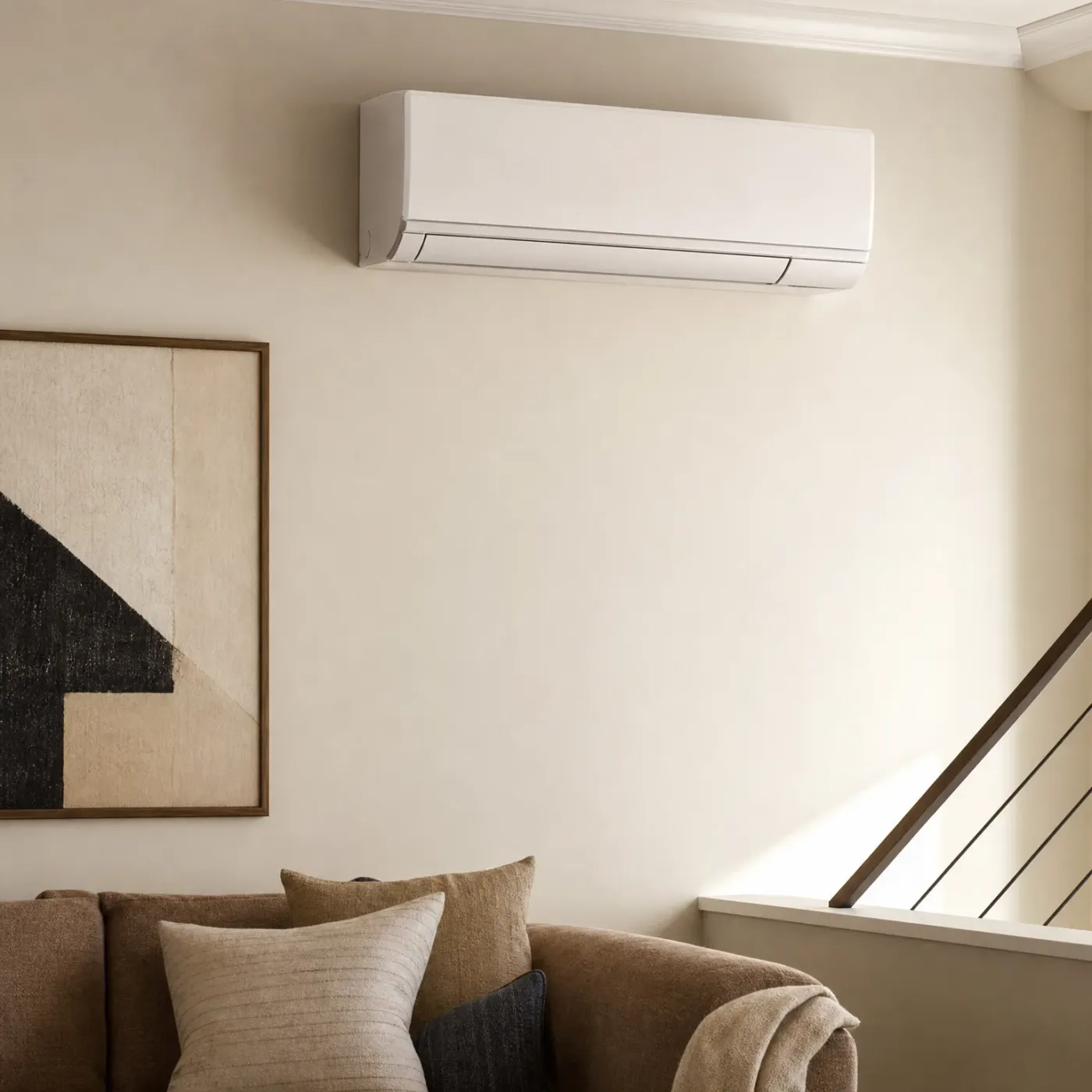
A white wall-mounted mini-split indoor unit high on a beige interior wall, above a brown sofa with cushions and a throw, beside a framed abstract artwork and a stair railing.

A mini split pro near you

Find a pro near me

Answer a few questions instead of calling shop after shop.

You only hire the pro if you want to.